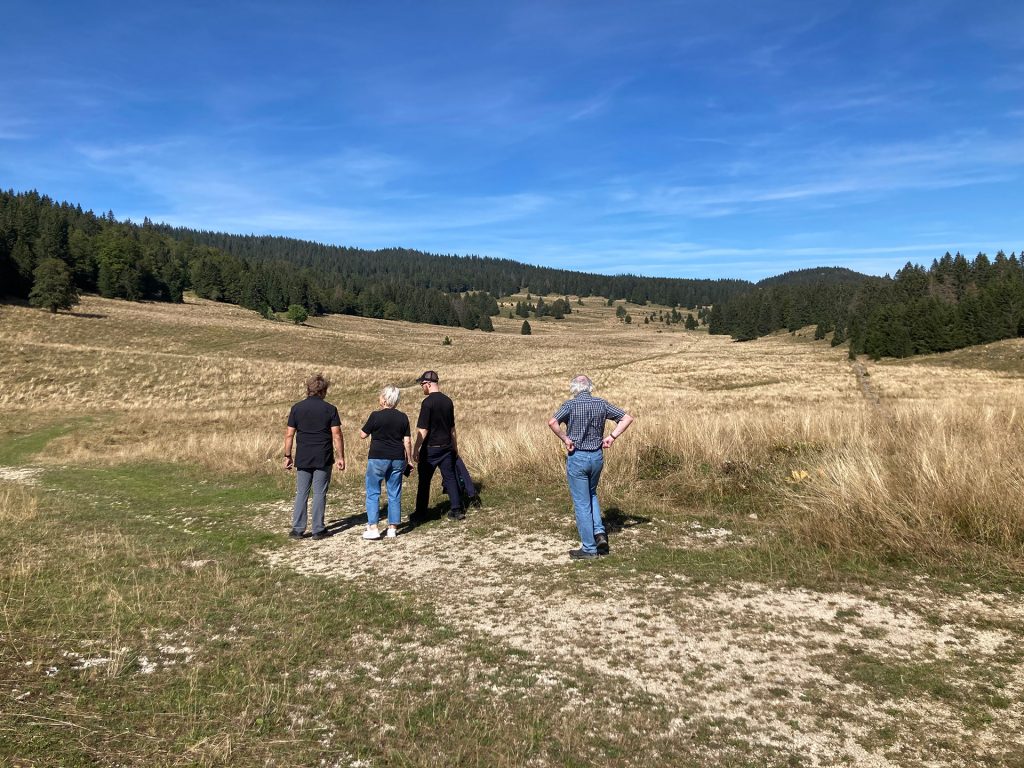
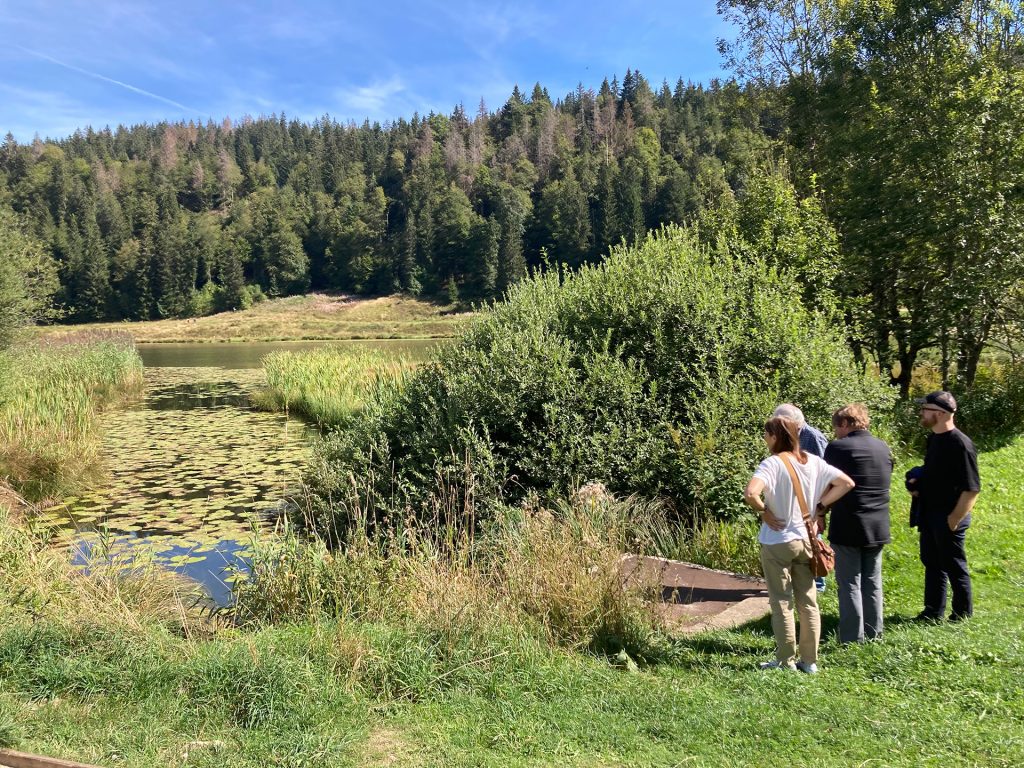
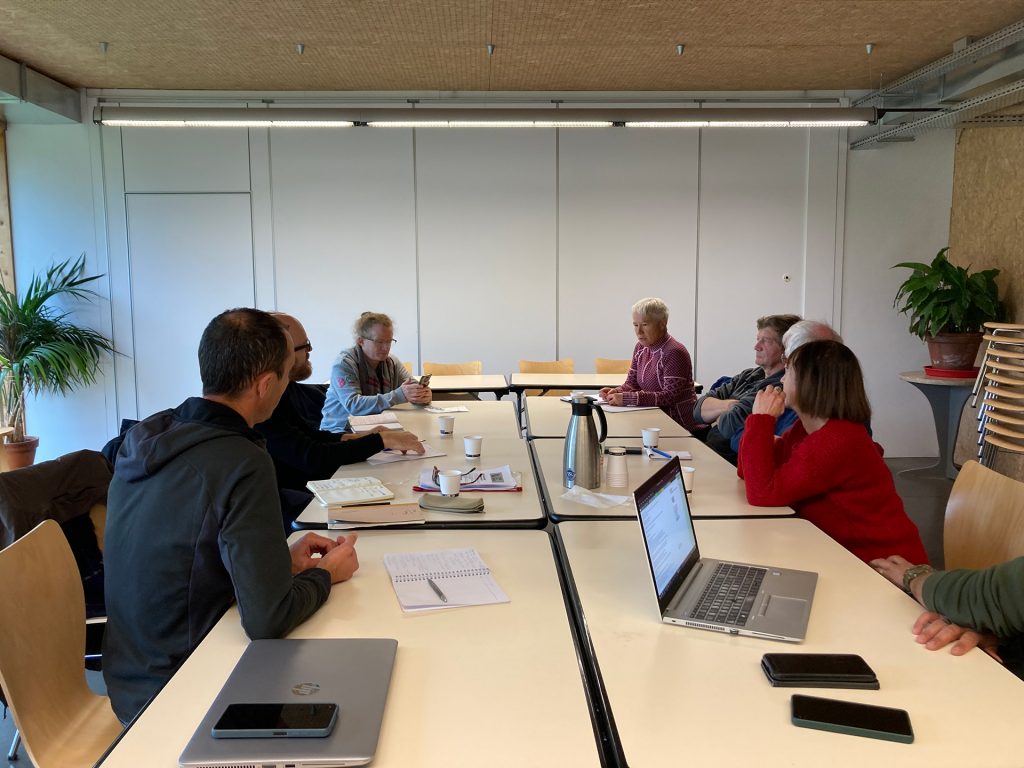
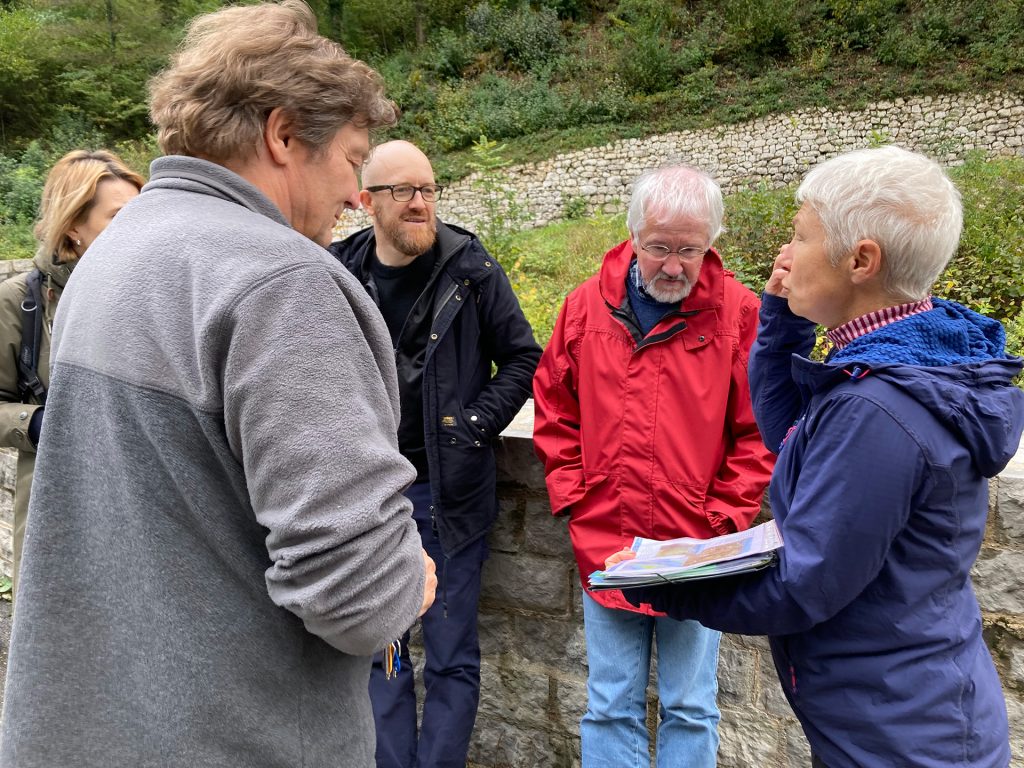
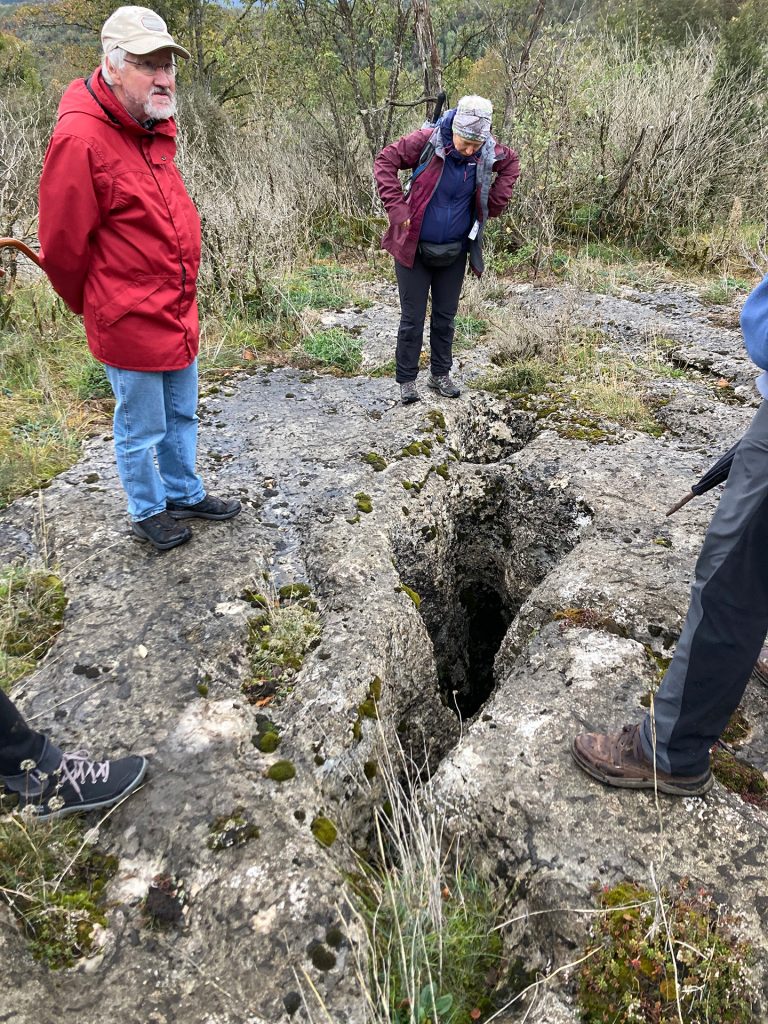
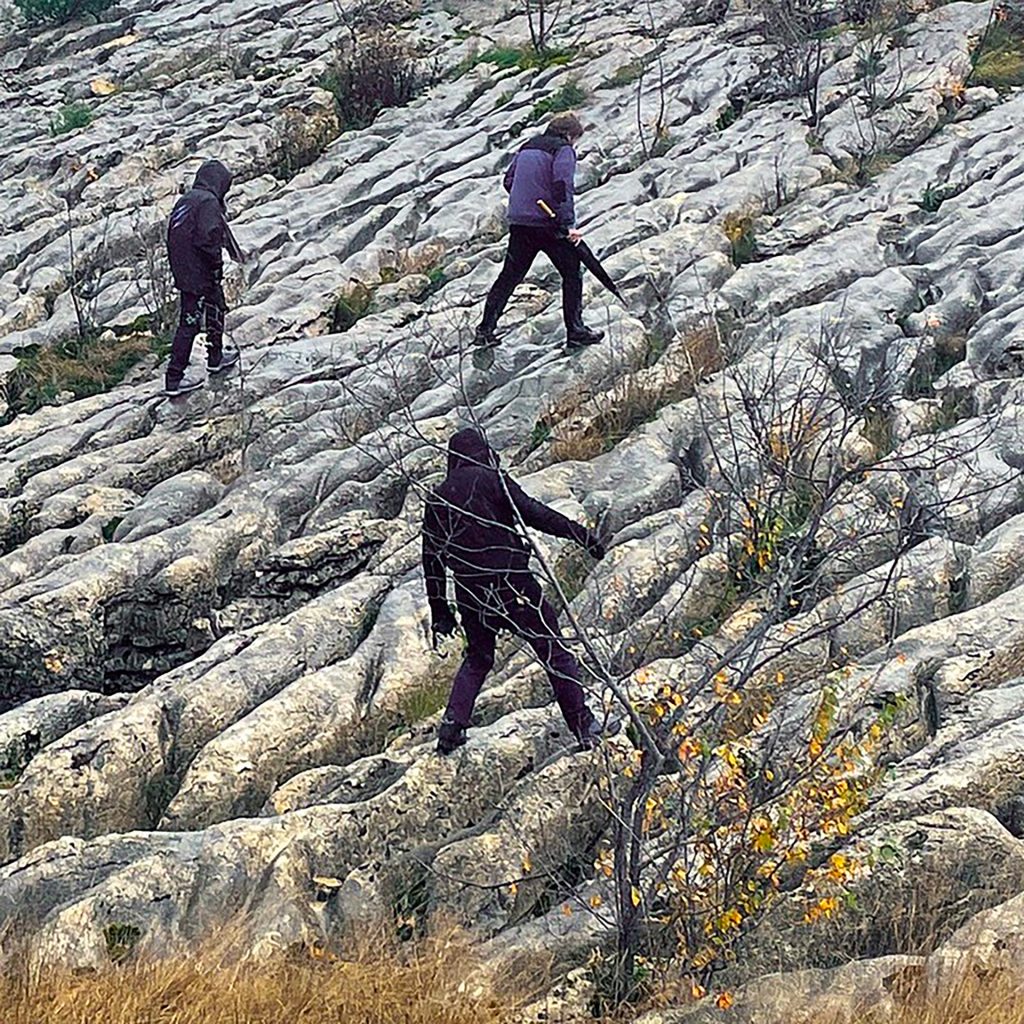
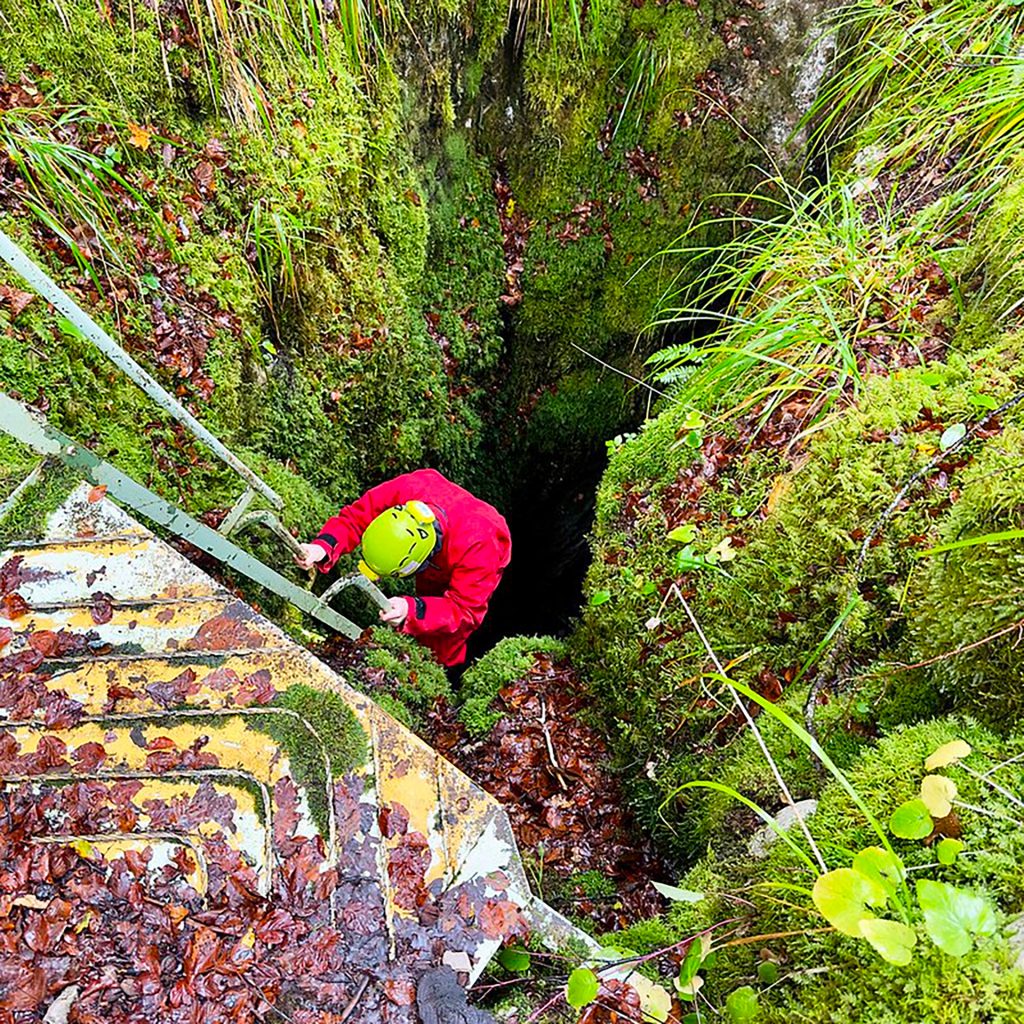
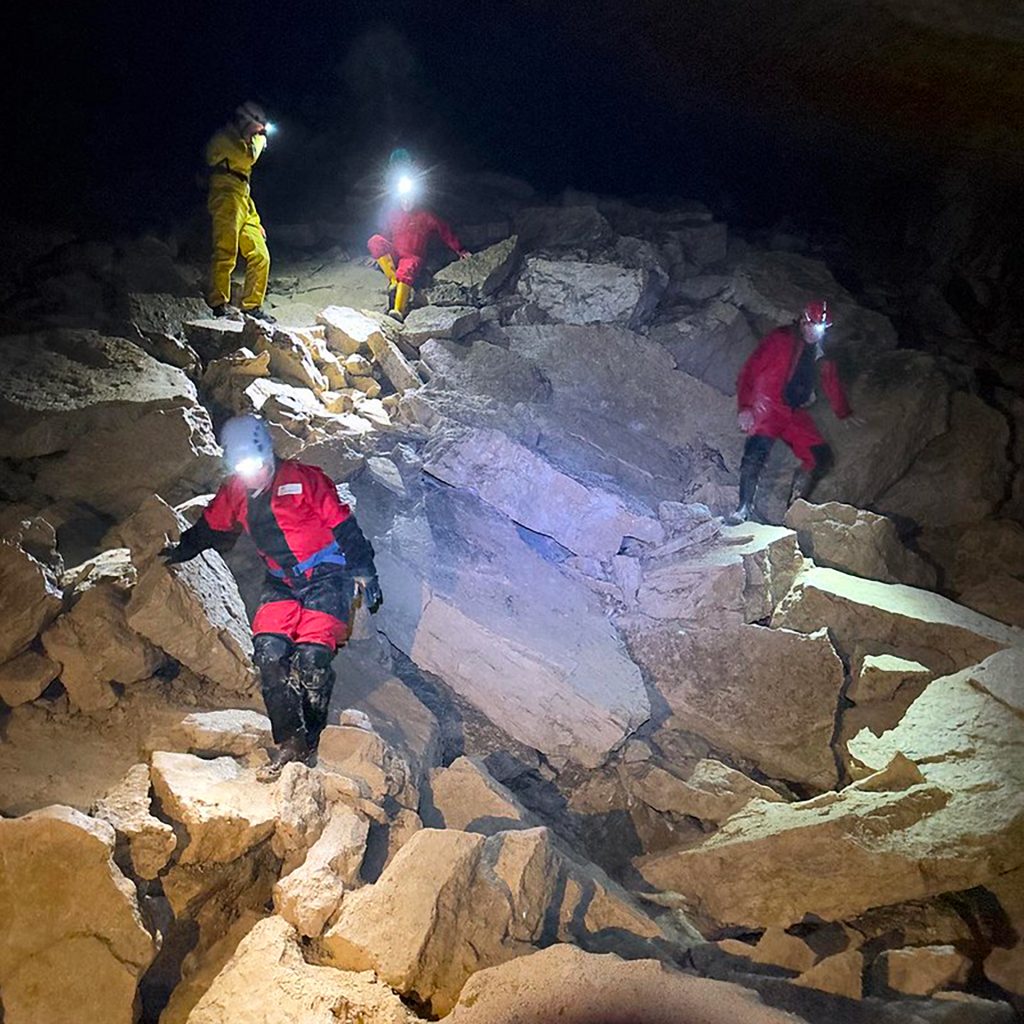
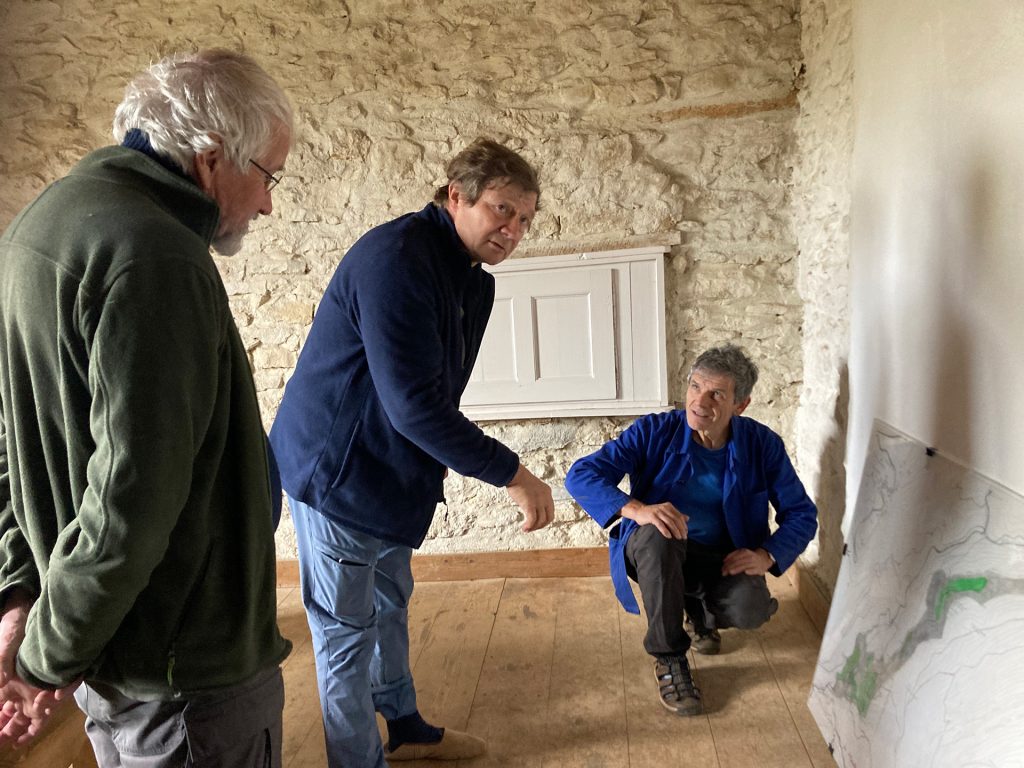
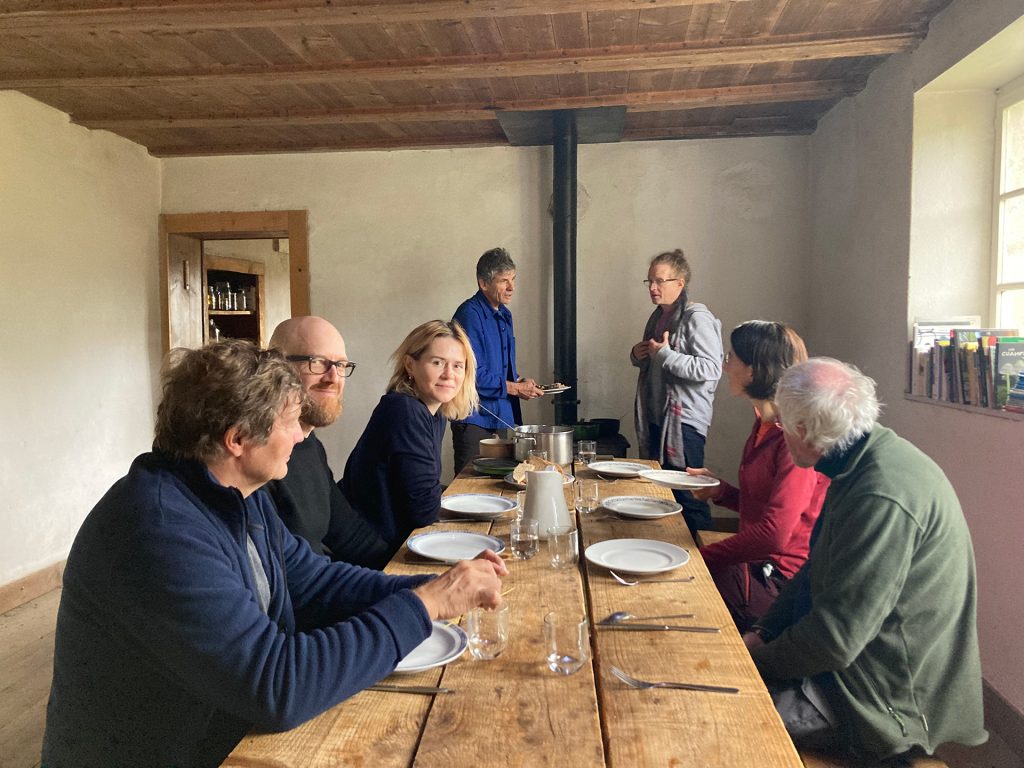
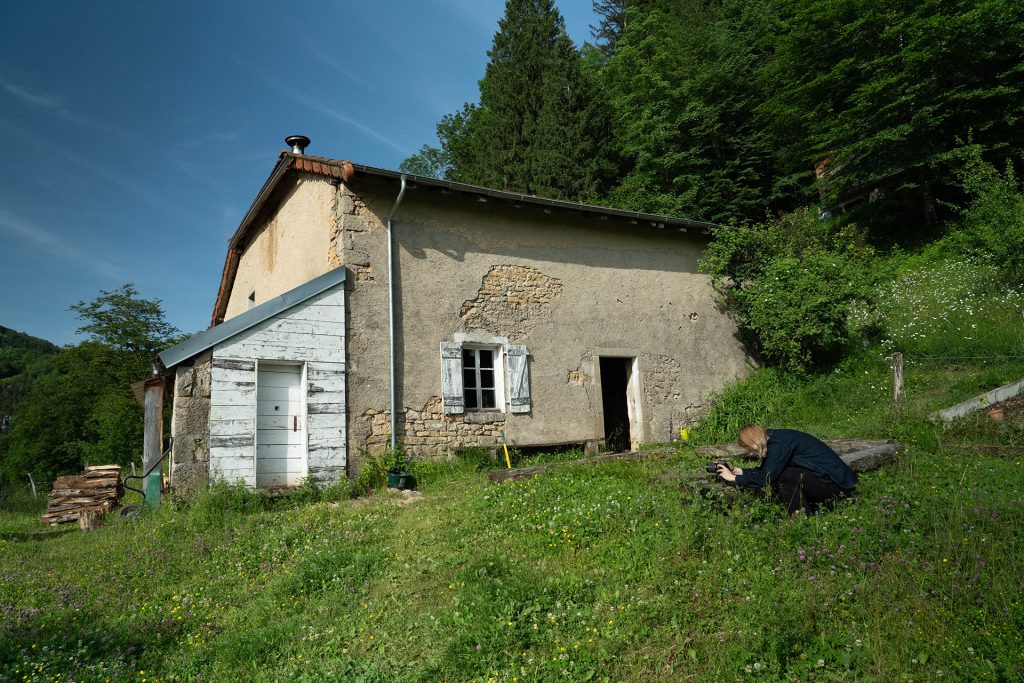
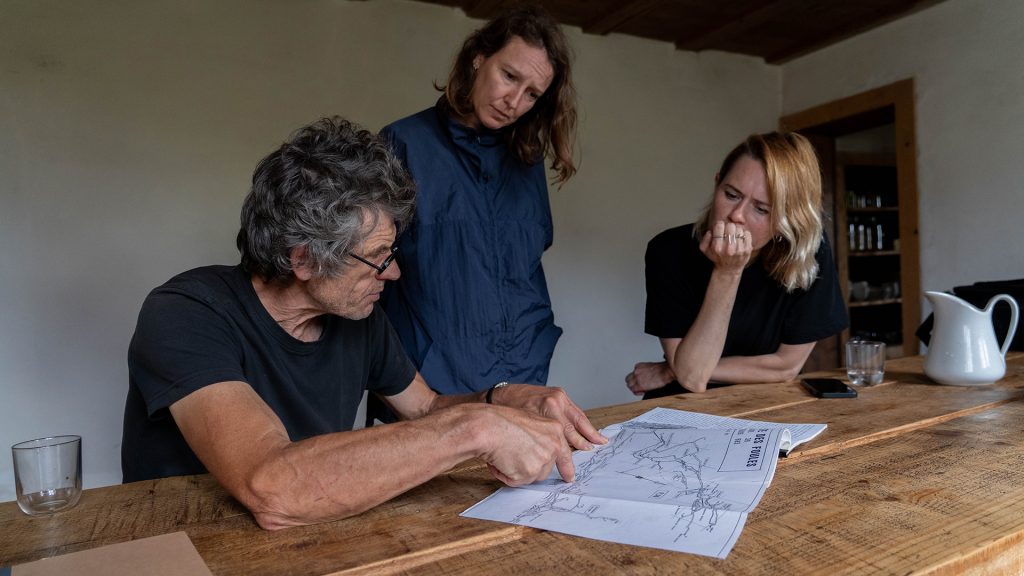
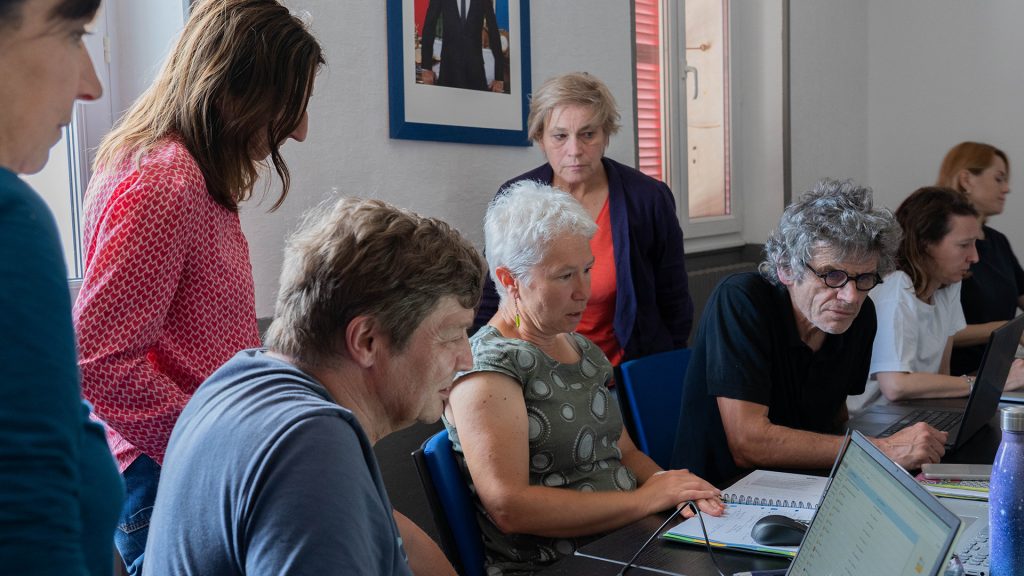
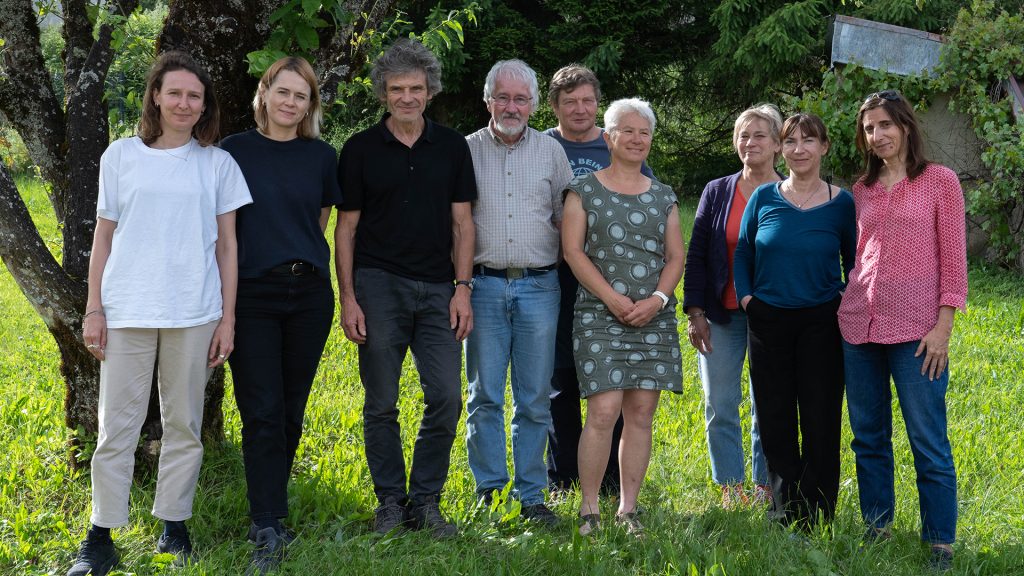
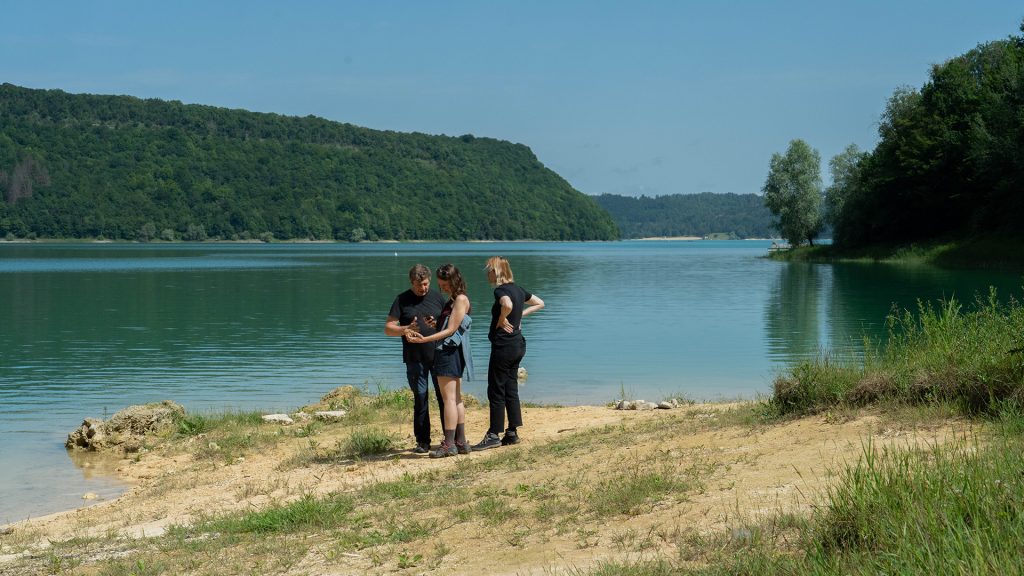
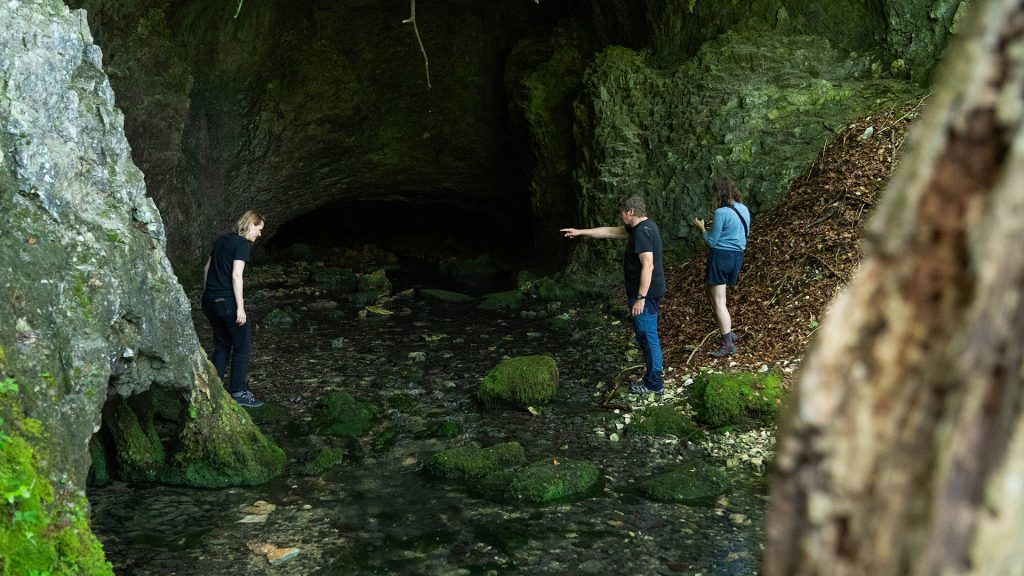
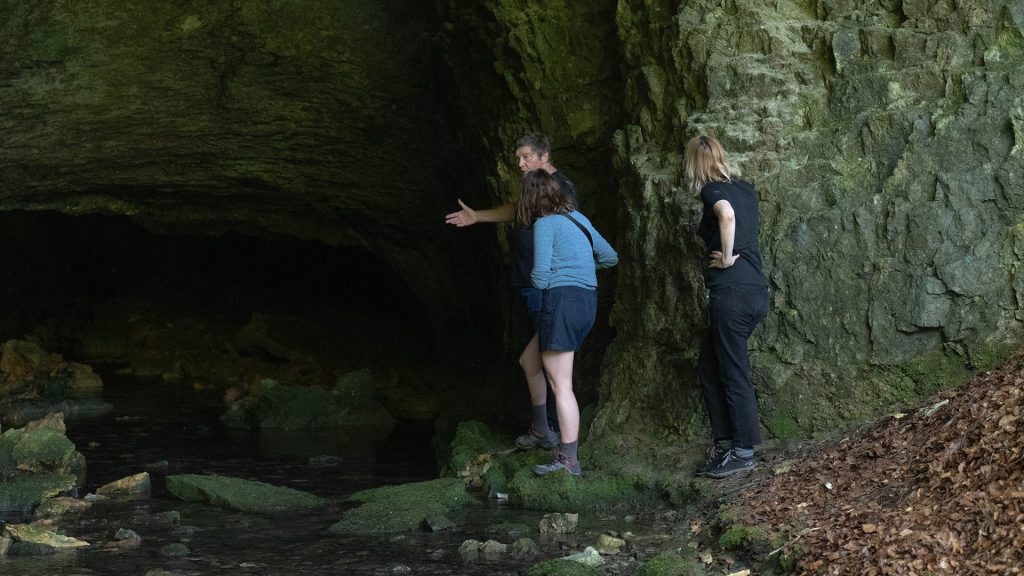
In 2022, an elected representative and three speleologists, supported by the Haut-Jura Regional Nature Park initiated an art commission addressing the theme of water in karst environments.
Karst is a distinctive feature of the vast fractured limestone massifs of the Jura, where water circulates deep underground. Geographers, hydrogeologists and speleologists study this phenomenon, which has prompted a number of initiatives, particularly by the Haut-Jura Regional Nature Park, a key player in protecting the future of water resources. Although karst systems provide water for a third of the population, the increasing alternation between severe droughts and episodes of intense rainfall is making them more vulnerable.
For the commissioners, a forward-looking artistic approach was regarded as essential in order to explore a phenomenon that continues to harbour many uncertainties. The water cycle in karst landscapes has become a major environmental issue, yet it remains largely unfamiliar to the wider public. By involving artists, the aim is to raise awareness of ongoing climate change and to anticipate more effectively the consequences it brings for the management, distribution and uses of what must be collectively redefined as a “common good”. But how can we deepen understanding of this unique geological context — a network that is difficult both to grasp and to represent?
The work proposed by DISNOVATION.ORG takes the form of a video, designed to be viewed either as a continuous projection or through a series of independent chapters. Its guiding principle is to interweave the geological and social specificities of a territory that, during the nineteenth and twentieth centuries, played a pioneering role in the invention of collective economic and social forms. The inquiry follows the course of water as it infiltrates the rock, disappears and re-emerges elsewhere; it journeys through deep geological time while also recounting anecdotes and shared histories. Karst landscapes emerge here as sentinel zones, revealing a series of tensions surrounding water — present and future — in agricultural, ecological and public health contexts. The collective seeks to bring this investigation into dialogue with narratives of social invention, both local and global, in order to open reflection on, and envisage new forms of water commons for today and for the future.
This commission is part of the European project “Art Living Lab for Sustainability”, supported by Creative Europe (CREA EU), which brings together three organisations focused on environmental commons: in France (the Société des Nouveaux Commanditaires with the association À demeure), in Spain (Concomitentes), and in Belgium (De Niewe Opdrachtgevers).