The New Patrons of the 15-20 Hospital

  • New PatronsA group of staff and residents of the 15-20 Hospital
  • Artist(s)/Creator(s)Myriam Lefkowitz
  • Structure médiatrice3CA
  • MediatorMari Linnman, Marie Chênel
  • Contexte·sHealth/Care
  • Dates2022-Ongoing
  • SiteHôpital des 15-20 (Hôpital national de la vision)
  • Address28 rue de Charenton, 75012 Paris
  • RegionÎle-de-France
  • Partnersla Société des Nouveaux commanditaires et l'Hôpital 15-20

Staff members and residents of the 15-20 Hospital commissioned a work designed to resonate with people who are blind or partially sighted, as well as with staff and the surrounding community.

The 15-20 Hospital is a national eye hospital, the origins of which date back to the Maison des Aveugles, founded by Louis IX near the Place du Palais-Royal. Under Louis XVI, it was relocated to its current site, formerly occupied by the Black Musketeers Company, which was dissolved in 1775. The hospital functions as a small university hospital, specialising exclusively in eye conditions. Around 200 visually impaired residents live there permanently.

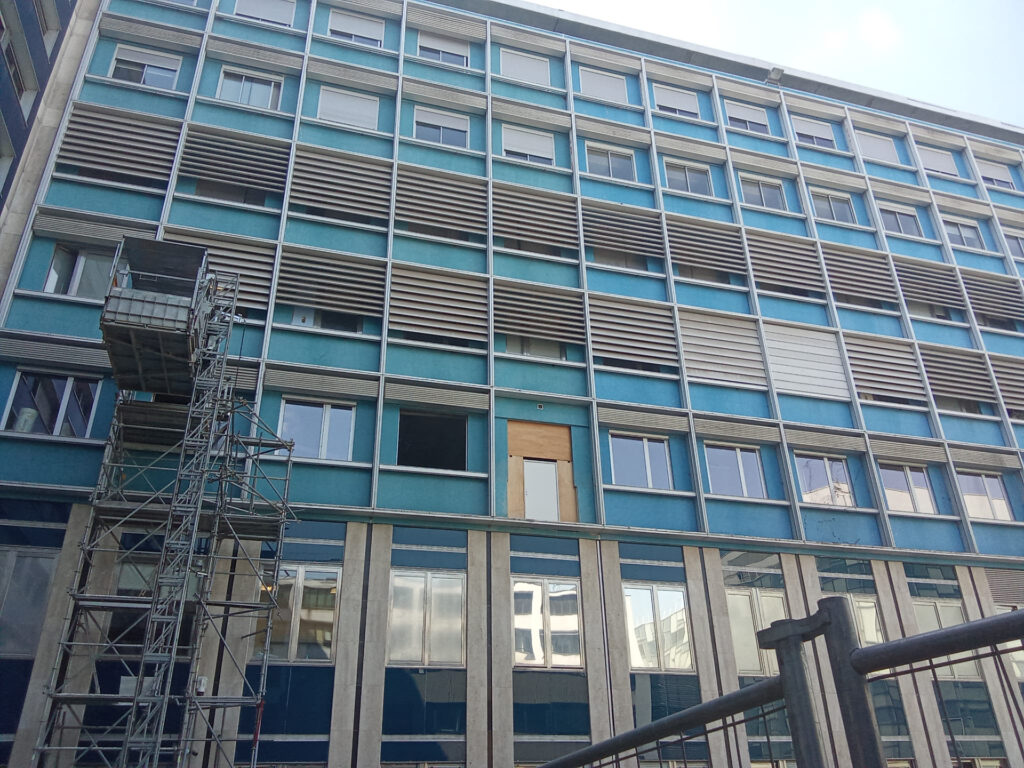
A group of staff and residents came together as commissioners, driven by the belief that art is a powerful form of expression and a catalyst for inclusion — something no one should be denied, especially not because of a disability. At the 15-20 Hospital, major redevelopment works are underway, bringing uncertainty and disruption to daily life for both staff and residents. In response, the group expressed a wish to transform the hospital’s outdoor spaces into areas of respite, offering a place to relax and recharge beyond the daily demands of work.

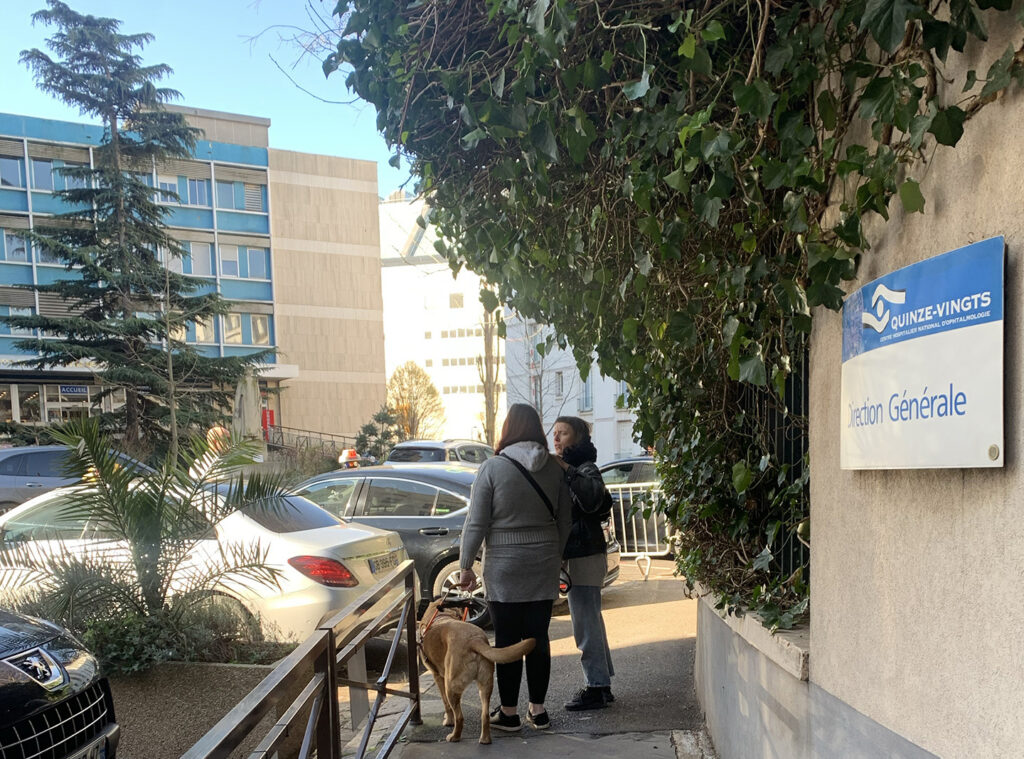
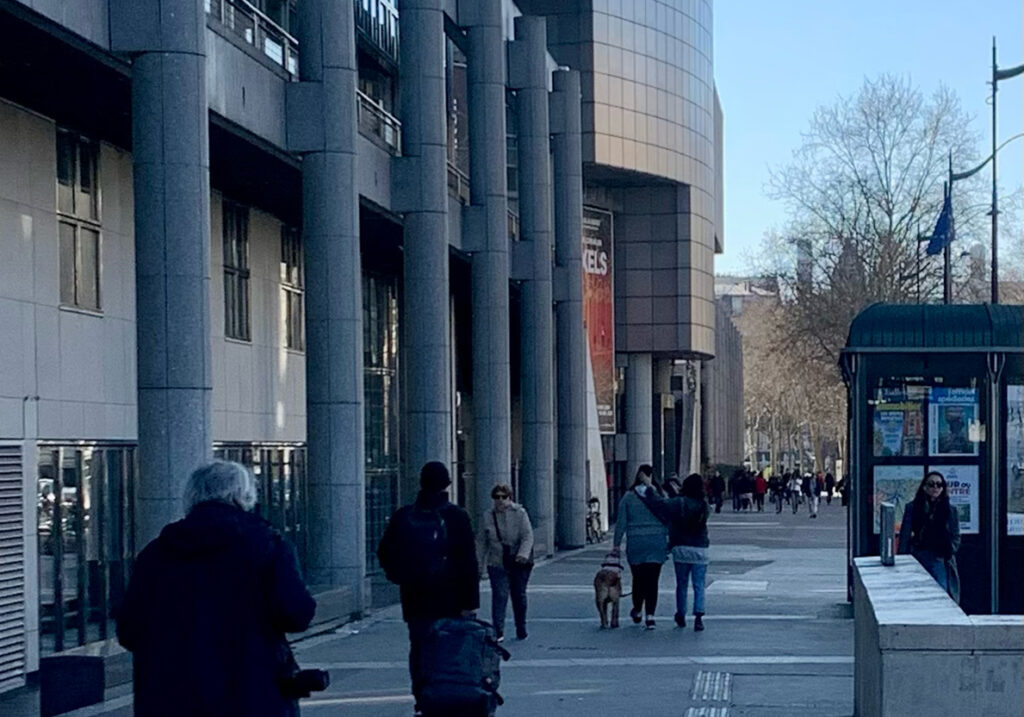
"The day began with a meeting with Céline (a blind person who lives in the hospital residence) and Onco (her guide dog). We set off for a walk in the neighbourhood. Onco navigates with pinpoint accuracy. I had never seen anything like it. I had never walked with a guide dog before. Normally, in this situation, I am the guide. Now there are three of us walking, and I'm not sure who is guiding whom. I keep my hands on Céline's right arm, then on her hand, then on the back of her head. I tell myself that I'm going to try not to let go of that contact." Myriam Lefkowitz
Céline holds Onco's leash on her left. She is busy reading, deciphering everything Onco says through his pace, his changes of direction, his pulling force. Our conversation is punctuated by their dialogue. The three of us walk together. I imagine that Céline and Onco are guiding me, with my eyes closed, through the corridors of the residence. There is something intriguing about this, at least for me. An unlikely encounter that generates new perspectives on issues that are familiar to me. I take note of this desire to “stay here”." Myriam Lefkowitz
‘Working from gestures of support, between hands, canes, dogs, furniture: choreographing a situation where these gestures circulate between us (sponsors, hospital staff, performers, colleagues) and, through the circulation of these gestures, asking ourselves how each person's position/status/role could be set in motion?’ Myriam Lefkowitz
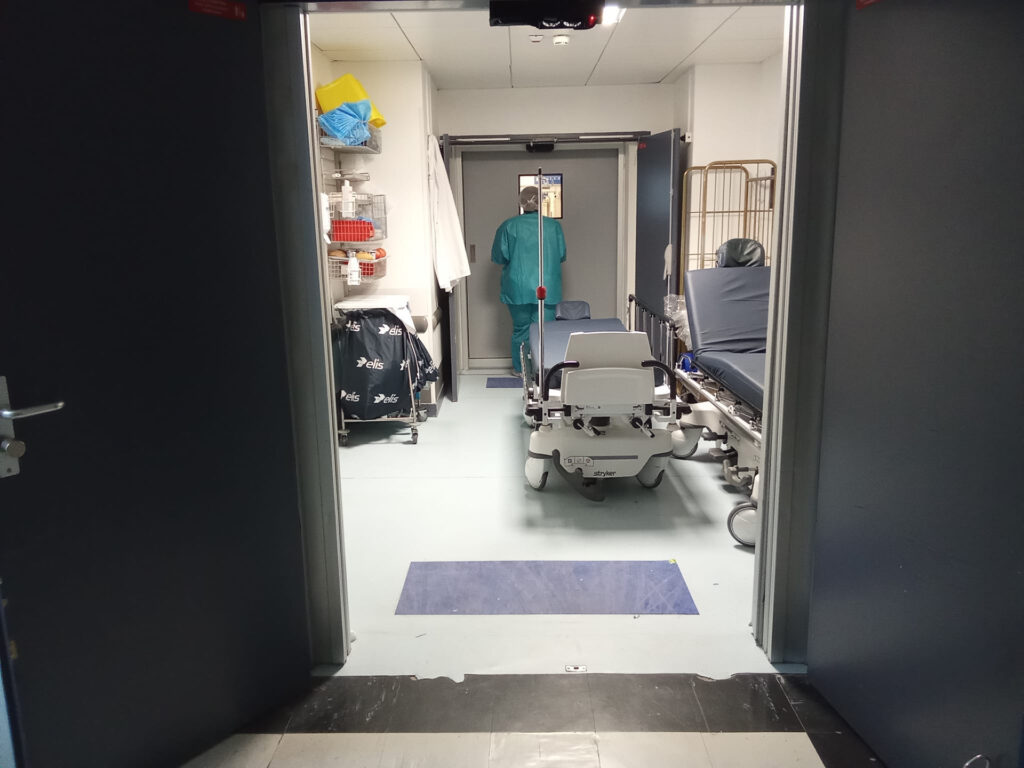
‘Circulating these gestures, composing a specific choreography for each space in the hospital, in response to the space. Between the spaces under construction, the waiting rooms, the reception rooms, the consultation rooms, the operating theatre, the airlocks, the basement...’ Myriam Lefkowitz
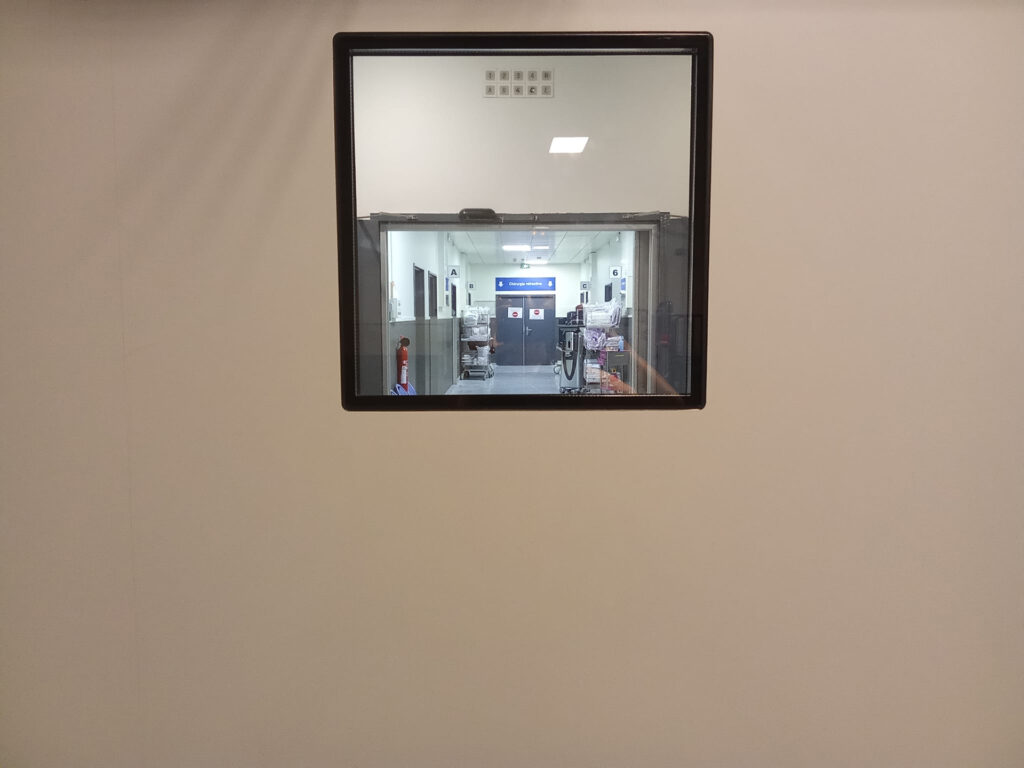
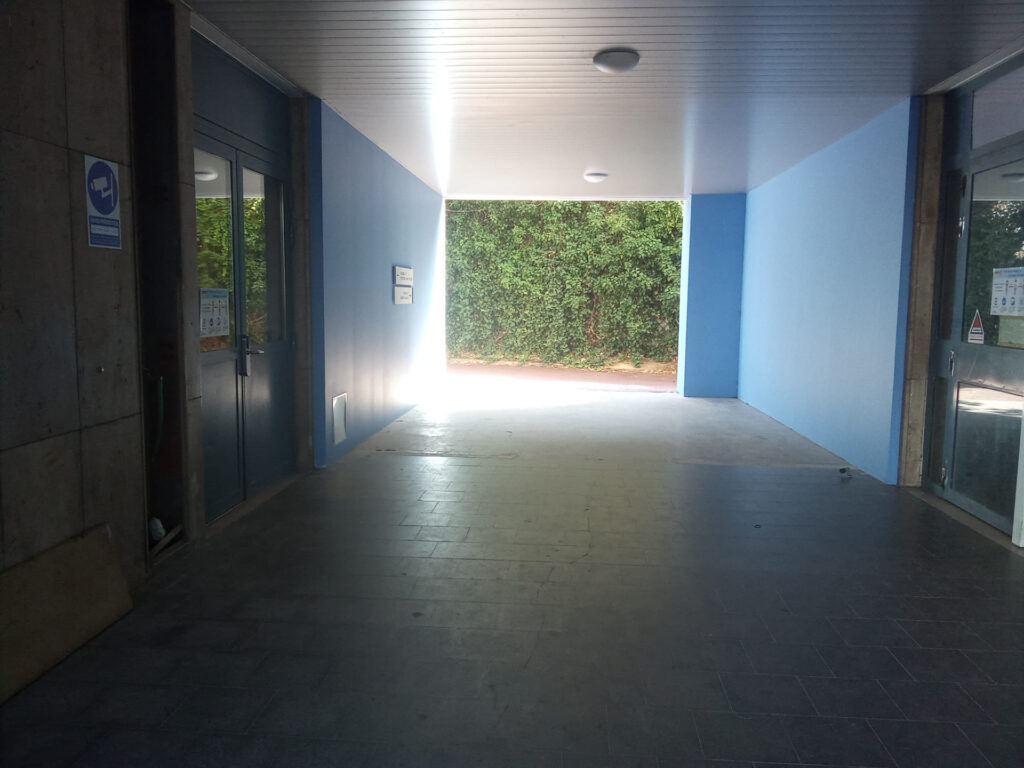
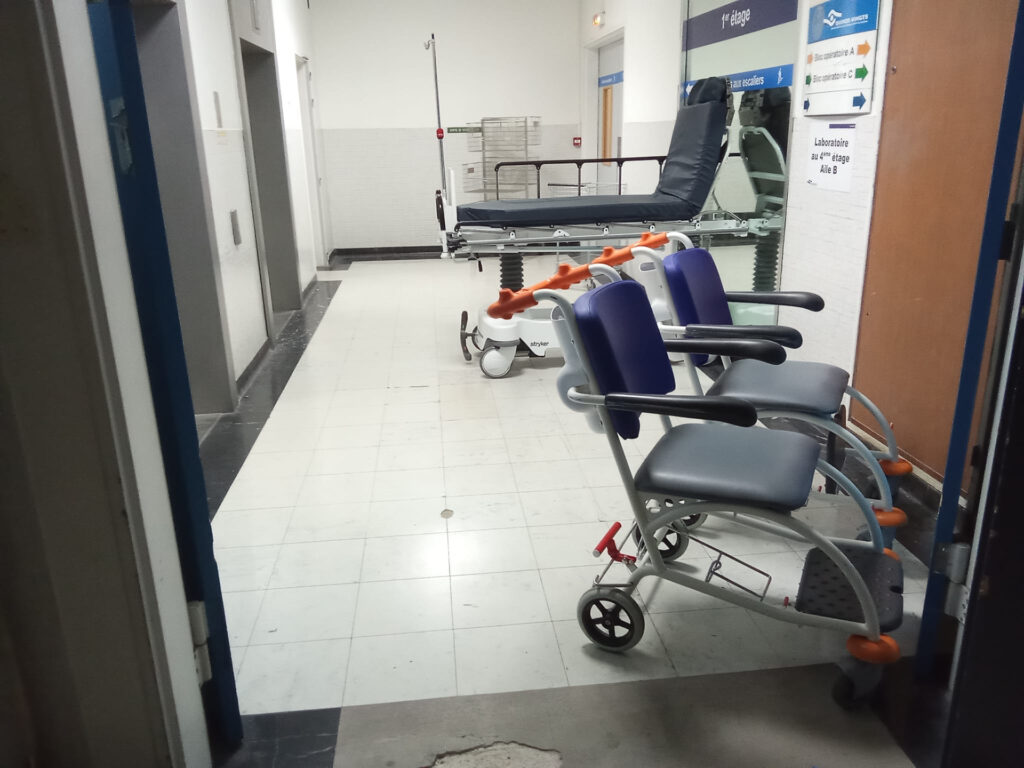
‘I start taking photographs of places where I imagine how these gestures of support could infiltrate the existing space. What would that do to the space?’ Myriam Lefkowitz
‘Each of these photos would have an audio description, and this audio description would be translated into Braille, so there would always be two versions side by side: the photo for sighted people and the photo for blind and visually impaired people – ensuring that each perspective remains incomplete.’ Myriam Lefkowitz
‘I wonder how this series of photographs could circulate throughout the hospital and coexist with the nursing staff, administrative staff, etc. So that the images could move from one space to another according to the changing desires of the people who will live with them.’ Myriam Lefkowitz