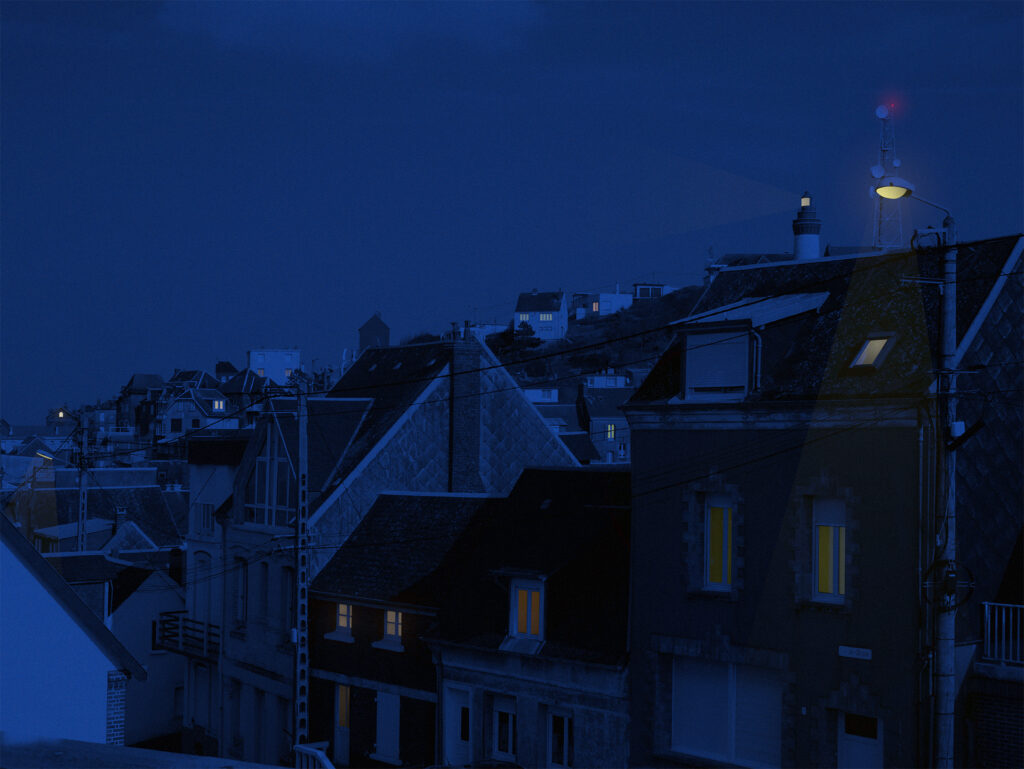
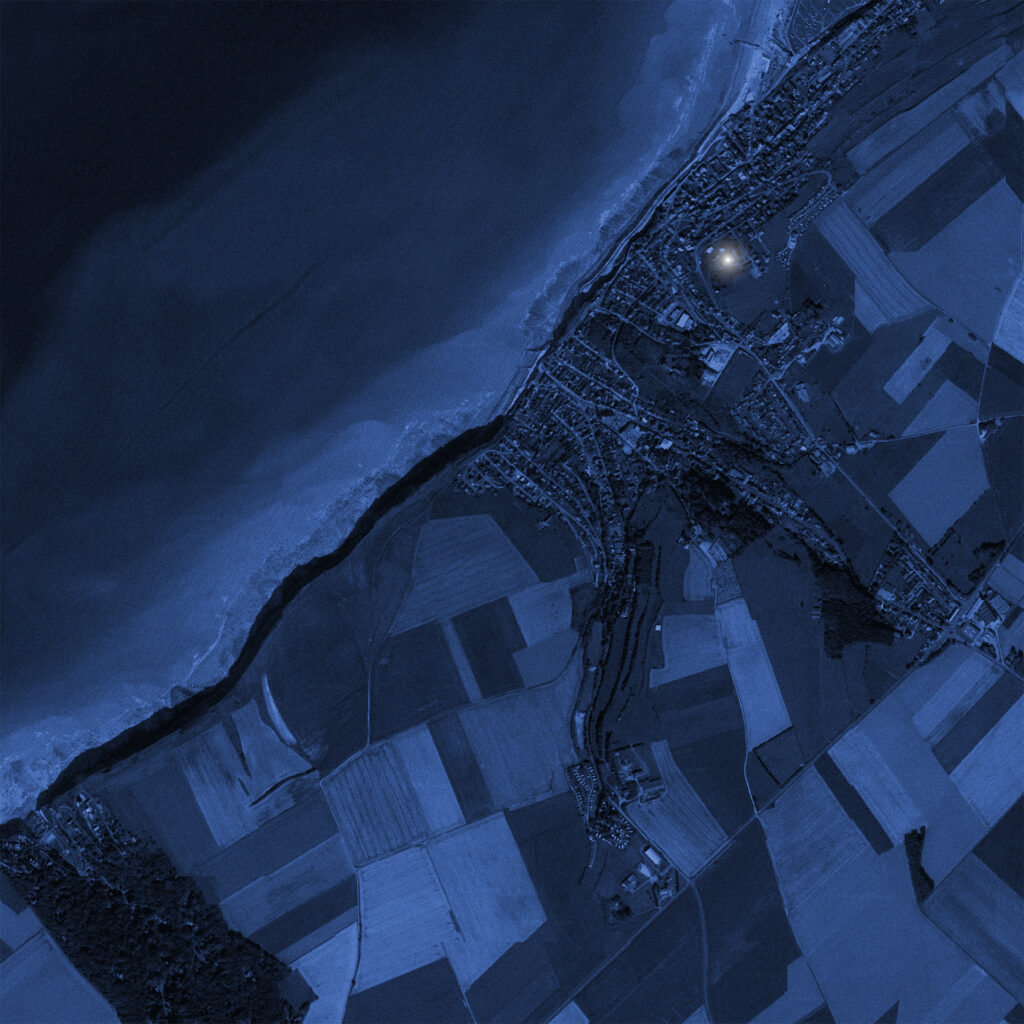
Residents of Ault commissioned an artwork to give the lighthouse a new identity and to mark its opening to the public.
The Ault Lighthouse, also known as the Onival Lighthouse, was built on the Onival cliffs in the town of Ault, near the Bay of the Somme, and entered service in 1951. It stands on the site of a military signal station. Formerly accessible by footpaths, the lighthouse could be visited by residents and tourists alike, thanks to the cooperation of the keeper who lived on site with his family.
Since its automation in 2011 and the closure of the northern side of the site for military purposes, the lighthouse has lost its direct connection with the town. The keeper’s house has gradually fallen into disrepair, the access paths have since been privatised, and the lighthouse once familiar to the inhabitants has remained permanently closed to the public. A small group of residents expressed the wish to commission an artwork to re-establish the lighthouse within the life of the town, in the hope that the local association or the town council might build upon this initial step to enable the site’s reopening to the public.
The work Une parade nuptiale was created in response by artist Grégory Buchert, with technical assistance from Lukas Truniger. The artist conceived a piece designed to bring the lighthouse back to the heart of the town: the lighthouse’s beam becomes the reference signal for around fifty small lights scattered across the town. These lights will switch on in rhythm with the lighthouse for about 36 minutes each day: ‘To create the illusion of an almost bewitching electrical phenomenon, to imagine a constellation connecting the various districts of Ault, by bridging the obstacles of the landscape, to bring the light of the lighthouse to places it does not reach[…]’.
When the lighthouse reopens, the artist envisages producing some chamois cloths, to be lent to visitors as they enter the lighthouse, inviting them to repeat the gesture of the lighthouse keeper who once climbed and descended the stairs, ‘running the cloth from one end of the handrail to the other’.