The Initiative

The New Patrons of Euralille - Bob, Erwin Wurm, 2013 - artconnexion © André Morin

The New Patrons initiative is a unique programme that empowers citizens to commission works of art or research that address social, cultural, or environmental issues directly affecting them.

Through a wide range of forms and disciplines – visual arts, architecture, design, theatre, cinema, literature, dance, music, comics or science – the initiative facilitates and structures citizen involvement in cultural production in local areas, promotes local assets, fosters social connections and offers bespoke responses to specific challenges.

Launched in the early 1990s by artist François Hers, the Fondation de France and a handful of pioneering mediators, the initiative is founded on the belief that art can play a vital role in society by responding to real, tangible needs.

With 30 years of experience and over 500 works produced, the New Patrons programme establishes a democratic framework for collective action and to “shape society”. It brings together artists, citizen commissioning groups, mediators and partners, each with clearly defined roles and responsibilities according to an established protocol.

Le Protocole Nouveaux commanditaires, François Hers, 1990
1

Setting up a group of patrons

Meetings with the mediator, definition of the focus of the project and drafting of the brief.

2

Selection of an artist whose practice corresponds to the brief

Selection process, meetings with the patrons, drafting of a research contract with the artist, and delivery of the preliminary study.

3

Preparation for production

Technical studies, budgeting, permissions, identifying funding opportunities, drafting of contracts for the production and maintenance of the work.

4

Creation of the artwork

Production, delivery and installation of the work, along with the implementation of communication tools.

5

Inauguration and the life of the artwork

Inauguration and long-term engagement with the work, with support for stakeholders to ensure its activation and legacy over time.

The Players

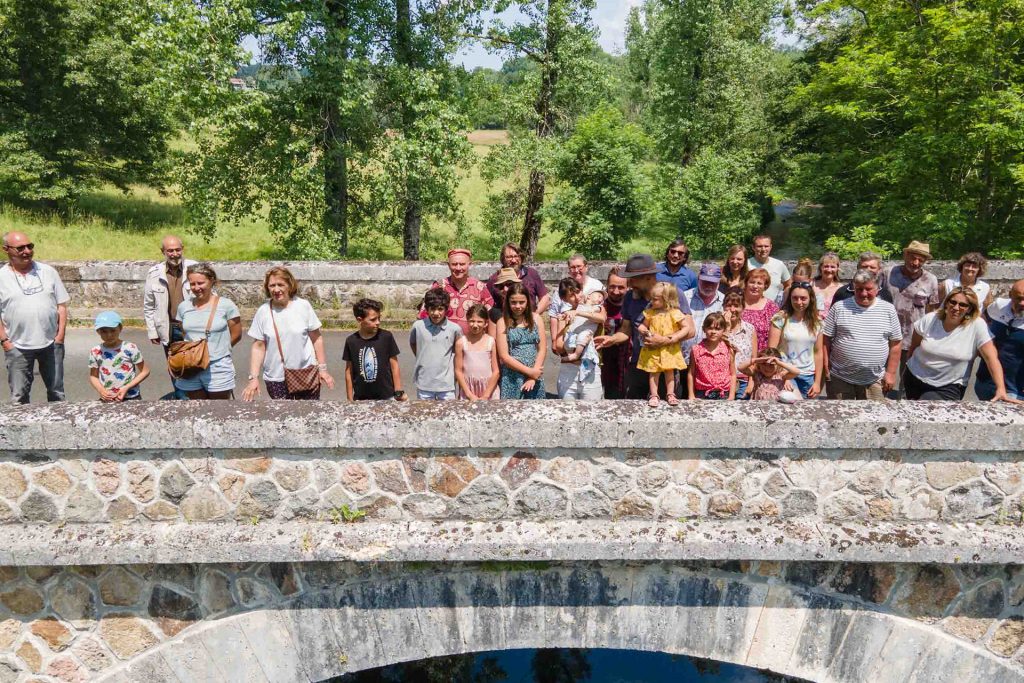
Tous sur le pont ! Les commanditaires et des habitant·es des trois villages sur le pont Rouchaud, juin 2023. © Guillaume Argento

New Patrons*

«The artwork has a role in bringing together people from different backgrounds. It’s one thing to say that theoretically on paper, but it’s even better when you experience it in real life. Commissioning a work of art isn’t something you do every day; it’s a responsibility. I believe the New Patrons exist for this purpose — to tell artists that art should also be for ordinary people.». Bruno Lestienne, member of a New Patrons group

Patrons are citizens — residents of cities, suburbs, or rural areas, of all ages, origins and professions: locals, butchers, teachers, pupils or students, pigeon fanciers, doctors, barge operators, florists, teenagers, journalists, unemployed people, workers or farmers. Thousands of people in France, across Europe and worldwide have been actively involved in the creation of nearly 500 commissions. The diversity of patrons reflects a wide range of concerns and aspirations.

United by a shared topic, the commissioning group may already be established or continue to evolve during the course of the project. No artistic knowledge is required, nor is any financial contribution expected. However, being a patron is a responsibility: they are the ones who identify the issue their commission addresses and who express their needs and wishes in a project brief. They act as a point of contact for the artist and are involved in every phase of the project’s development.

Once the artwork is completed, the patrons take part in promoting and activating it.

The commissioners’ commitment is key to the project’s success, and they play a vital role in embedding the work in its local community.

* New Patrons are those commissioning but not usually sponsoring the artwork.

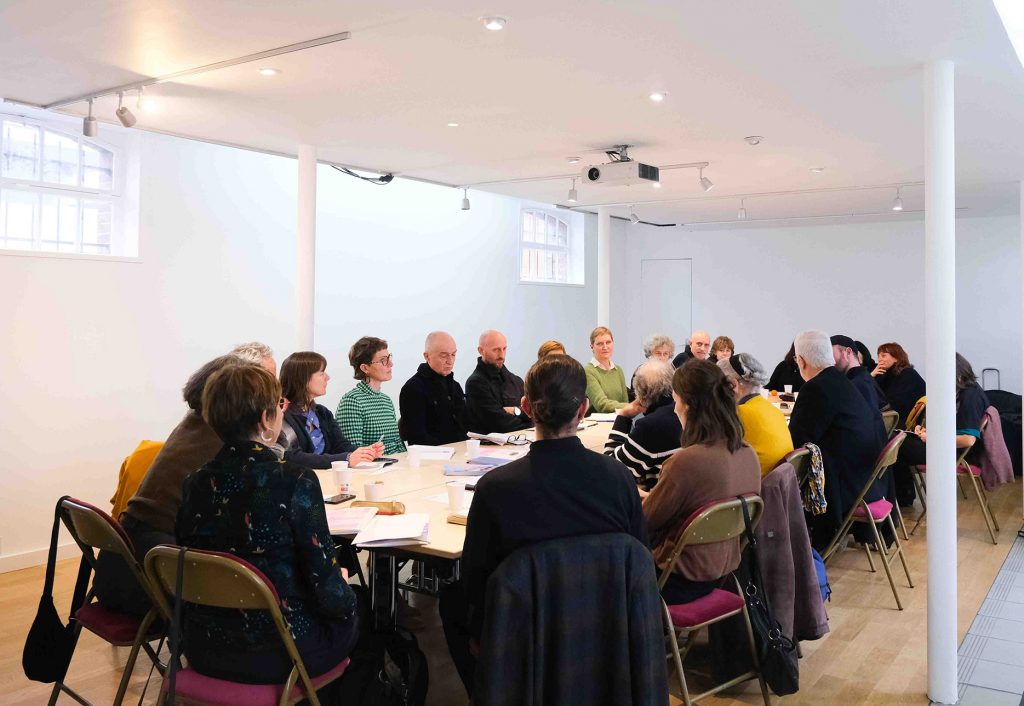
Le groupe de médiateur·ices lors d’une séance de travail dans une salle à la Ferme du Buisson.
Séminaire des médiateur·ices à la Ferme du Buisson, les 15 et 16 décembre 2023 © Nina de Castro

Mediators

«The New Patrons initiative is a powerful idea that fully aligns with the notion of community engagement today: it requires a willingness to engage with others and foster exchange. Together with the patrons and the artists, we invent spaces for freedom, thought and creation.» Marie-Anne Chambost, mediator

The mission of the mediator is to support the collaboration between the patrons, the artists and the partners, ensuring mutual understanding and to guide the commissioning process. With backgrounds in the fields of art, culture or the social sciences, the mediators possess in-depth knowledge of practices in contemporary art as well as an awareness of societal and local challenges. Their expertise lies in understanding the needs and expectations of the commissioning group and in supporting the artists in project delivery.

Often contacted directly by potential patrons, the mediators help to clarify the objectives and challenges, assess the feasibility of the project and define the scope of the artistic intervention. They propose artists whose work and approach are most relevant to meeting the needs set out in the brief.

The mediators facilitate meetings and discussions between patrons and artists and ensure that everyone is able to express their ideas and expectations. They assist with securing funding, relationships with partners and institutions, as well as the production and promotion of the work.

The Network of mediators
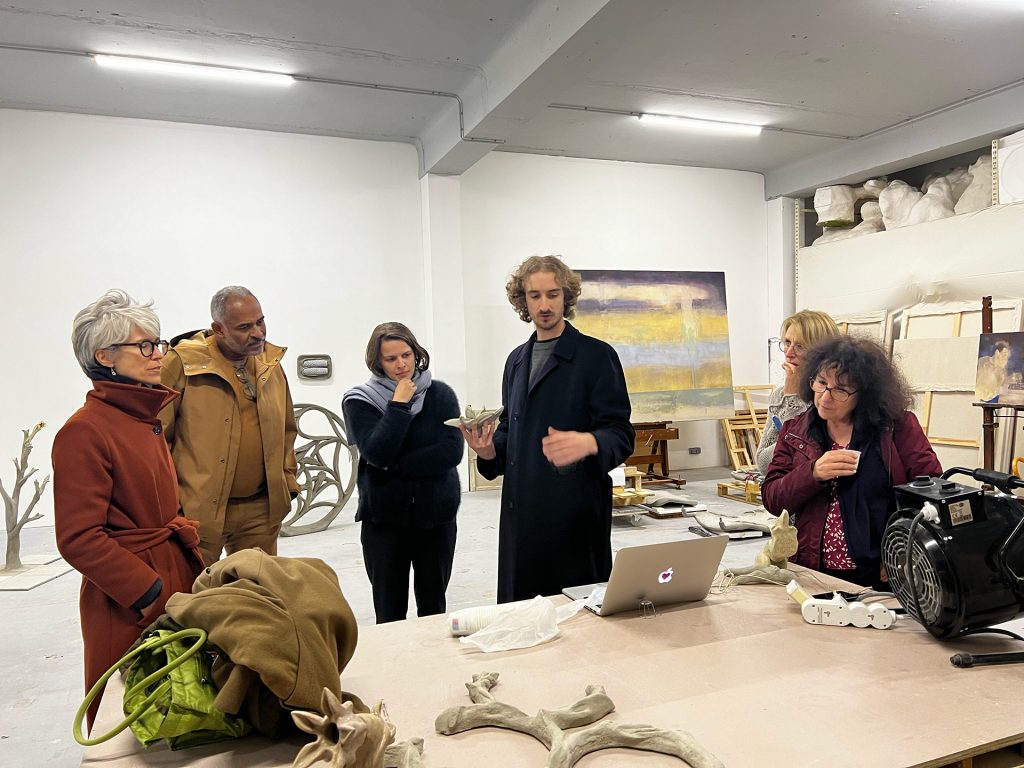
Visite de l’atelier de Xolo Cuintle avec les commanditaires : Valentin Vie Binet et Romy Texier leurs présentent certaines des pièces réalisées. © Thomas Conchou

Artists/Creators

«Our experience is more than conclusive; it reveals a new and essential role for art, one that fosters cultural democracy and enables us, as artists, to be active stakeholders. The continuation, development and expansion of the New Patrons programme across regional, national and European territories will ensure that artistic creation occupies a fundamental place—not merely to survive but to truly exist.» Artists in Le Monde opinion column dated 9 May 2021.

The New Patrons initiative is based on the meeting and collaboration between a group of commissioners and an artist (who may work alone, as a duo or within a collective). The artist’s task is to understand and interpret the needs expressed by the commissioning group in order to create a work that is meaningful and aligned with their expectations.

The artist is identified and selected according to the nature and context of the commission. All disciplines may be involved, including visual arts, architecture, design, music, theatre, literature, performance, dance, comics, film and sciences.

In the initial phase, the artist undertakes an artistic study based on the brief, engaging in continuous dialogue with the commissioning group. Once this study is approved, a production budget is established and the production phase can begin.

The resulting work can take various forms: an art installation, sculpture, park, building, musical composition, theatrical performance, film, book, protocol, and so on. Depending on the context, the work may be permanent or temporary.

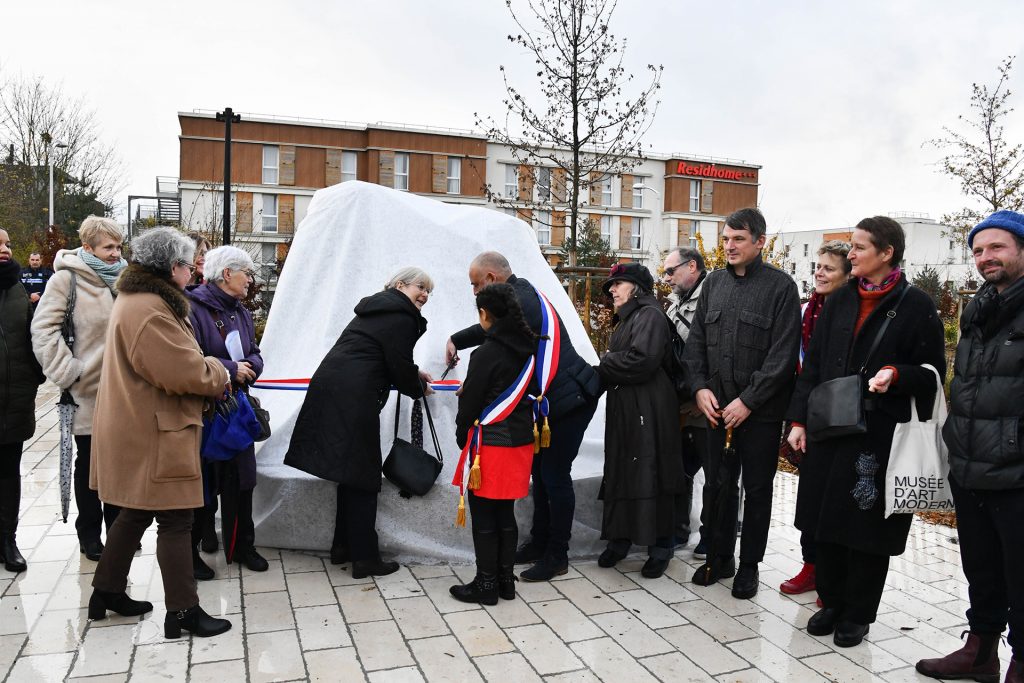
Les commanditaires, les artistes, la médiatrice, le maire et les élu·es de Guyancourt devant l’œuvre couverte, durant l’inauguration.
Inauguration de l’œuvre Rocher en Granite avec Bras, Lièvres et Banc, 2019, des artistes Daniel Dewar et Gérgory Gicquel en présence du maire et d’élu·es de Guyancourt © Blandine Schmitt Chambonneau

Partners

« By embracing shared responsibility, all the parties agree to address, through negotiation, the tensions and conflicts that naturally arise in democratic public life. » François Hers

The collective commitment of individuals determined to come together as a society by giving shared meaning to contemporary creation involves a wide range of partners, including national funding bodies, local authorities, institutions, foundations, sponsors and more. Their support is essential to the success and long-term sustainability of a commission.

Each commission involves multiple partners, such as local elected officials, administrative leaders and businesses. This network not only provides resources but often essential expertise, which strengthens local engagement and ensures the feasibility of the commission. Partners are involved at the earliest possible stage in the development of the initiative.

The completed work, funded through public or private grants and patronage, becomes the property of a public body. Its value is no longer defined by the market, but by the way it is used by the community and the symbolic significance it holds for them. Physical ownership of the work—created to contribute to our shared cultural heritage—may be transferred to an authorised organisation which takes responsibility for its care and conservation, under the terms of a maintenance agreement drawn up between the artist and the owner.

Examples

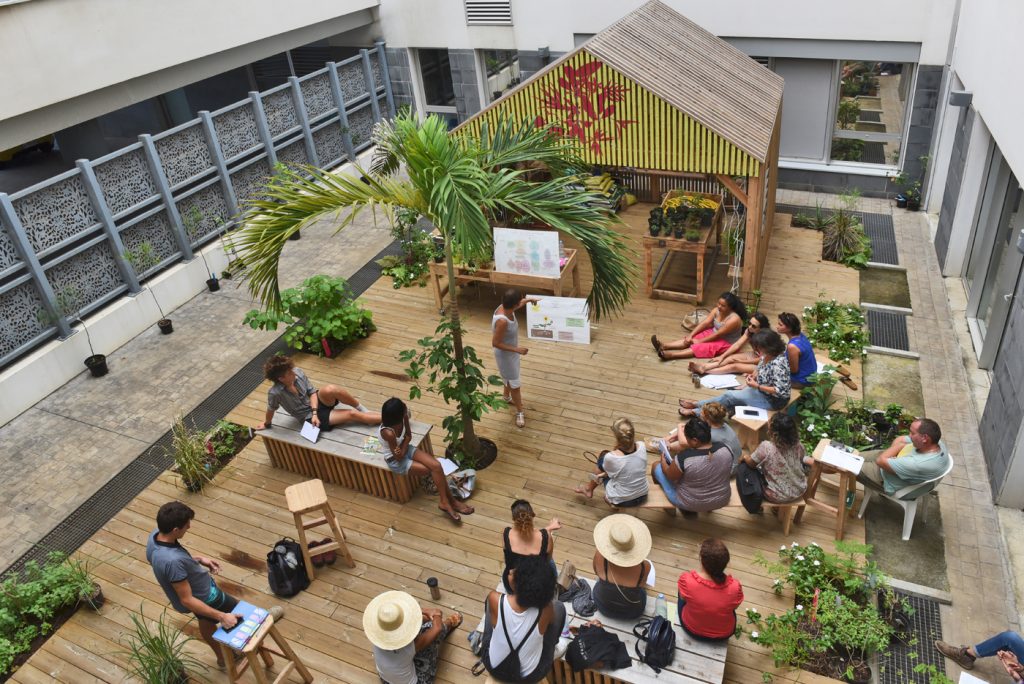
Dans la cour du CHU Saint Pierre, un groupe de personnes écoute un présentation dans le "Jardin la Nurserie". L'installation tout en vois est composée d'une terrasse centrale avec une structure avec une bâtisse ouverte et diverses plantes et mobiliers.
Rencontre au "Jardin la Nurserie" du CHU Saint-Pierre à La Réunion © R.Ravon

The Nursery Garden, Superflex, 2018

The Indian Ocean Regional Health Agency sought to bring together staff from three hospitals located on the islands of La Réunion and Mayotte through a shared artistic commission. This initiative aimed to affirm the collective identity and territorial continuity between the islands, while fostering dialogue and collaboration among healthcare professionals, the cultures of La Réunion and Mayotte and both modern and traditional forms of medicine.

In response, the artist collective Superflex created The Nursery Garden. Situated at the heart of the hospitals in Mamoudzou, Saint-Denis and Saint-Pierre, three gardens serve as spaces where staff, patients and visitors are invited to contribute medicinal plants and share the stories associated with them. These gardens also offer opportunities to participate in gardening activities, lead workshops or simply enjoy a space conceived as a refuge—a place of care and shelter for both plants and people.

Mediation-production: Mari Linnman, 3CA

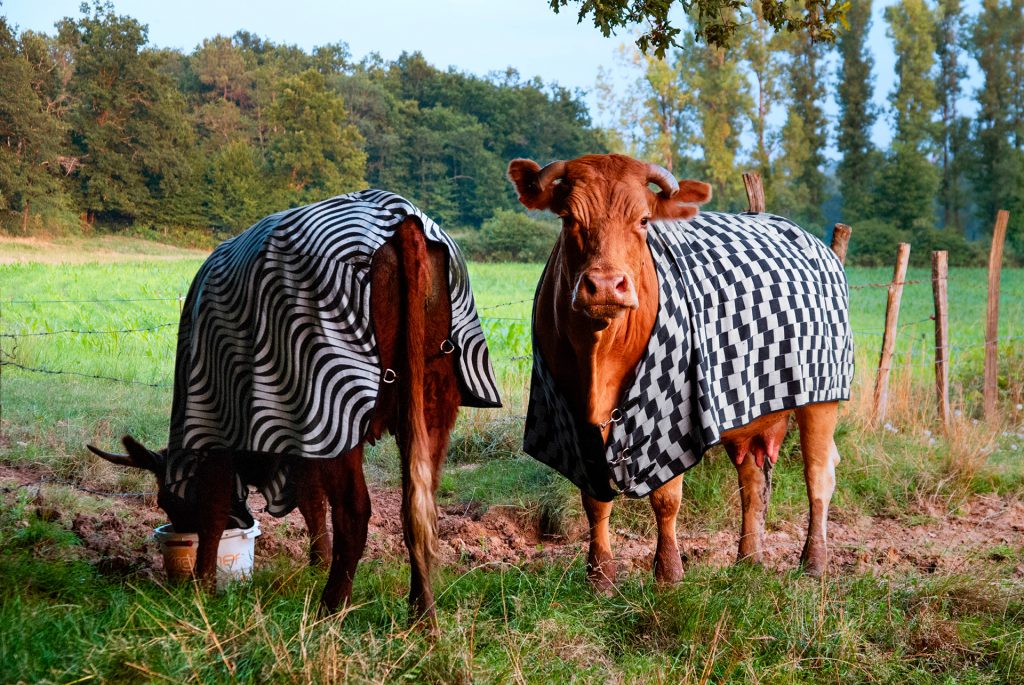
Deux vaches, en extérieur, portent des couvertures pensées par l’artiste Pierre Malphettes. L’une nous tourne le dos et mange depuis un seau. La seconde regarde l’objectif.
Photographie du projet Optiques Limousines : deux vaches de la race limousine portant les couvertures de l'artiste Pierre Malphettes. © Bernard Dupuy

Optiques Limousines, Pierre Malphettes, 2013

Members of the Réseau de Fermes ouvertes en Périgord expressed the desire for a work of art that could engage citizens who are sometimes disconnected from rural life, prompt reflection on the future of farming and highlight the fact that the landscape is also “shaped” by their herds of cows grazing in the meadows.

After spending time with the farmers, Pierre Malphettes developed his reflection on Limousin cattle and aimed to reveal the full elegance they embody. With Optiques Limousines, he created fabric blankets for the cows featuring patterns inspired by Op Art, transforming the Limousin cattle into the “vehicles” of the artwork. The project consists of several components — five fabric blankets with Op Art patterns, ten framed photographs depicting the cows in their natural environment adorned with the blankets and an easel to display one unfolded blanket. It can be exhibited as a whole or in separate parts, allowing members of the network to showcase it on their farms or at professional events.

Mediation-production: Marie-Anne Chambost and Pierre Marsaa, Pointdefuite

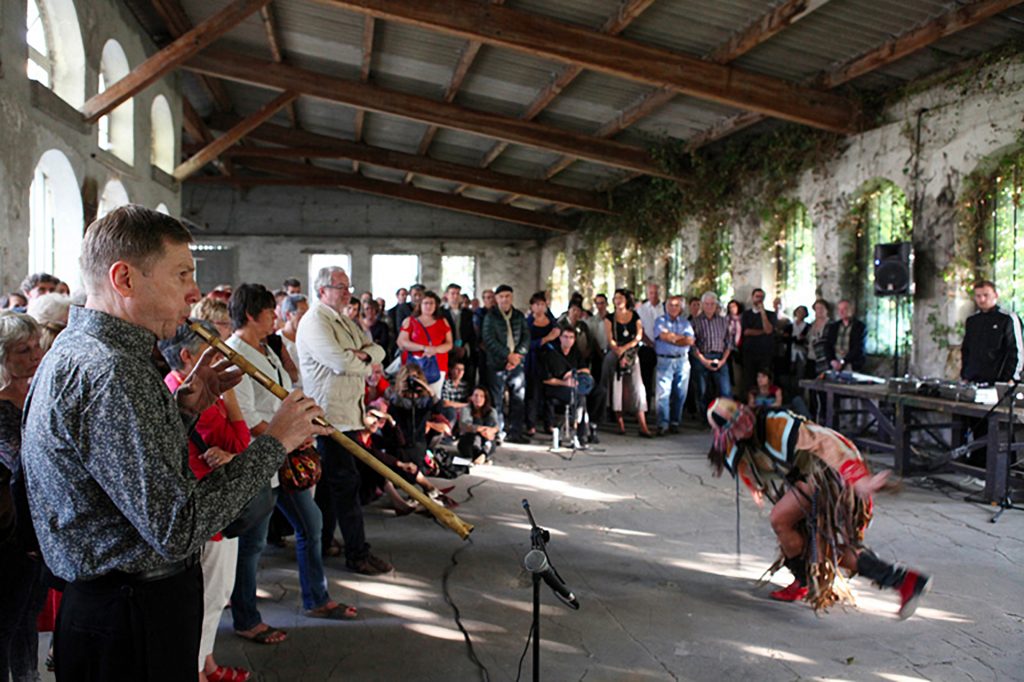
Dans un bâtiment, une performance chorégraphique d'une femme habillée en costume de chamane accompagnée de musiciens (un flutiste en premier plan), devant un public.
Activation de "La 72593e partie du monde" le 27 septembre 2014 : performance chorégraphique de Marianne Baillot portant le costume de chamane. © Phoebe Meyer

La 72593e partie du monde, Michel Aubry, 2014

The members of the Arbre association, the Engivane association and the Vercors Regional Nature Park commissioned a work that highlights the history of the Royans-Vercors area—particularly its traditional crafts and woodturning and tablet-making—while also looking to the future and reflecting the energies at play today.

Michel Aubry’s proposal draws inspiration from a sequence in A Sixth Part of the World by Dziga Vertov, which features a Siberian shaman dancing. He reimagined the shaman’s costume and paired it with sound pipes crafted in the woodturning tradition. “Like the shaman, sound connects elements from the forest with tangible objects.”
The piece was brought to life on 27 September 2014, with a choreographic performance by Marianne Baillot. Each year, new dance variations are performed in collaboration with associations from the Royans area.

Mediation-production: Valérie Cudel, à demeure.

Carried out as part of the inter-park cooperation project “Paysages industriels” with the Lorraine, Monts d’Ardèche, Pilat and Vercors Regional Nature Parks.

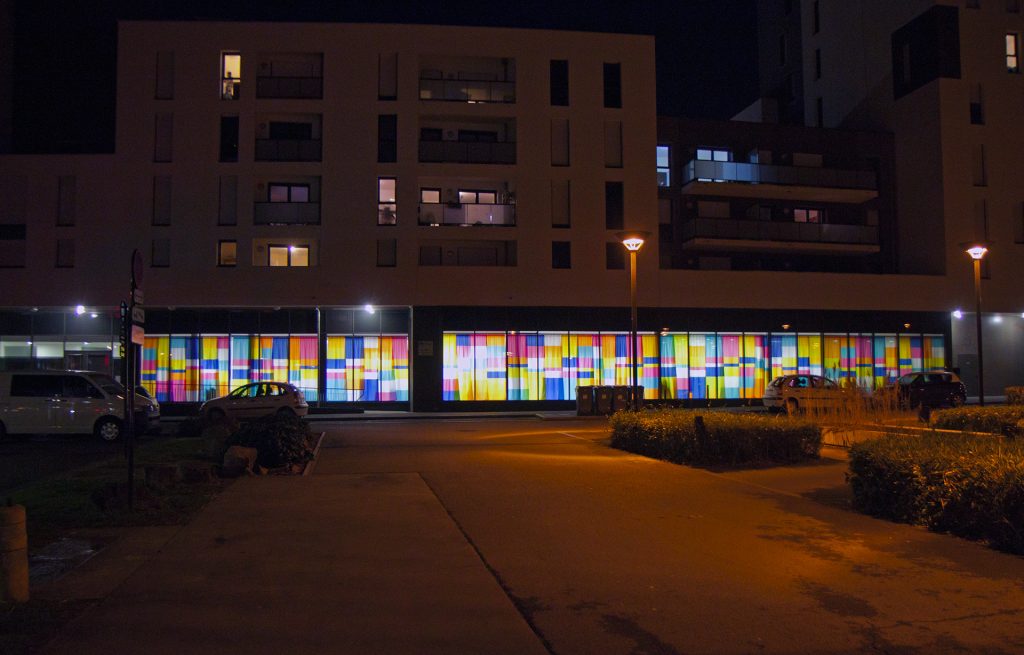
Vue de nuit du rideau coloré, déployé sur la façade vitrée. Des formes rectangulaires colorées sont imprimées sur ce tissu de 30m de long.
Beautiful Curtain #3 déployé sur la façade vitrée du Centre Thérapeutique de Jour de Saint-Jacques-de-la-Lande.© Patrice Goasduff

Beautiful Curtain #3, Lang/Baumann, 2019

A group of patients and the nursing staff at the Guillaume Régnier Hospital Day Centre chose to commission a public artwork to enhance the visibility of the new building and to help shift public perception of both the centre’s work and its users. The aim was also to highlight the building’s welcoming, protective nature and its openness to the outside world.

The artistic duo Lang/Baumann responded with Beautiful Curtain #3: a striking installation composed of 30-meter-long curtains printed with a dynamic arrangement of vividly coloured rectangles. Draped across the building's glass façade, the work transforms both the interior and exterior perception of the space. From within, it offers users a sense of ownership of the new environment, enriching it with bold tones and a warm, diffused light. Seen from the street, the building’s façade becomes a vibrant visual statement that acts as a visual beacon from the road.

Mediation-production: Éric Foucault, Eternal Network, Anne Langlois and Patrice Goasduff, 40mcube.

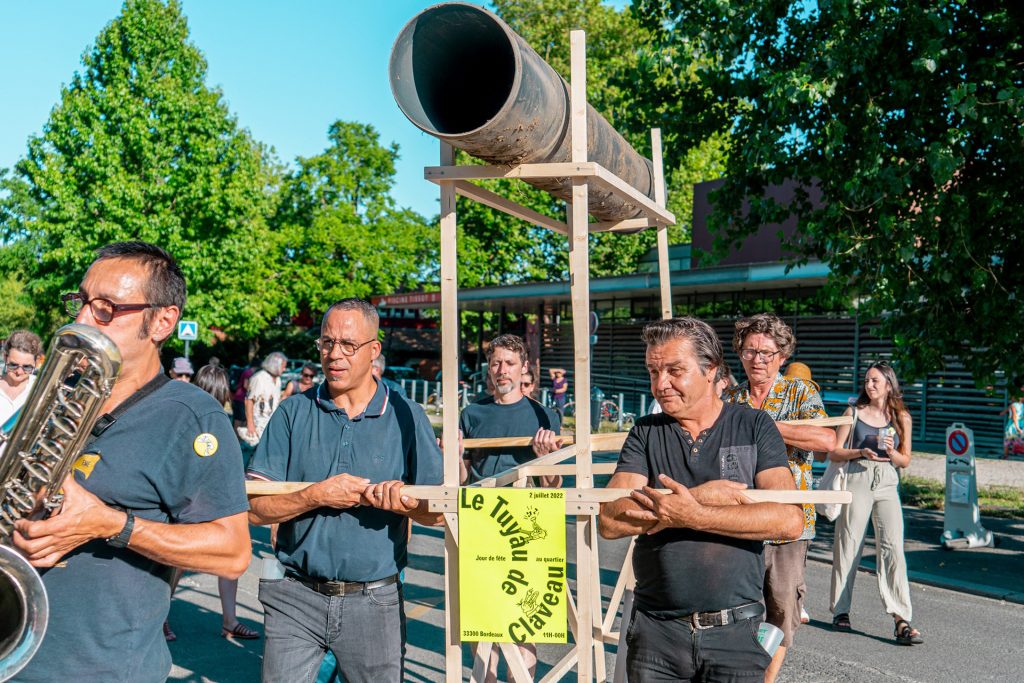
Plusieurs personnes portent une structure sur laquelle est posée un tuyau de canalisation, un homme joue d’un instrument à vent.
La procession du « Tuyau de Claveau » le 2 juillet 2022 dans le quartier Claveau à Bordeaux © Guillaume Argento

Le Tuyau de Claveau, Massimo Furlan et Claire de Ribaupierre, 2022

Residents and the architects overseeing the renovation of the Claveau district have commissioned a work—a ritual connected to the neighbourhood’s history—intended to revive its festive and convivial past. Their aim is to bring new life to this garden city, built in the 1950s, which once hosted brass bands and community celebrations.

In response, Massimo Furlan and Claire de Ribaupierre created Le Tuyau de Claveau, a convivial and popular event that is quirky and joyful, bringing local residents together to walk along the route of the underground drainage pipes. This is the invention of the Pipe procession — a ritual to call for attention to be given to the underground networks and to care for what is invisible and beneath the surface. The procession took place on 2 July 2022 and concluded with a celebration and a tasting of a cake called Le Tuyau de Claveau, a new culinary speciality born from a neighbourhood in transition.

Mediation-production: Marie-Anne Chambost and Pierre Marsaa, Pointdefuite