In 2011, local officials in the municipality of Runan expressed their wish to revitalise the church ossuary. The municipal team sought to reclaim the space occupied by several graves, either with the families’ consent to transfer the remains to the ossuary, or in cases where no descendants could be contacted.
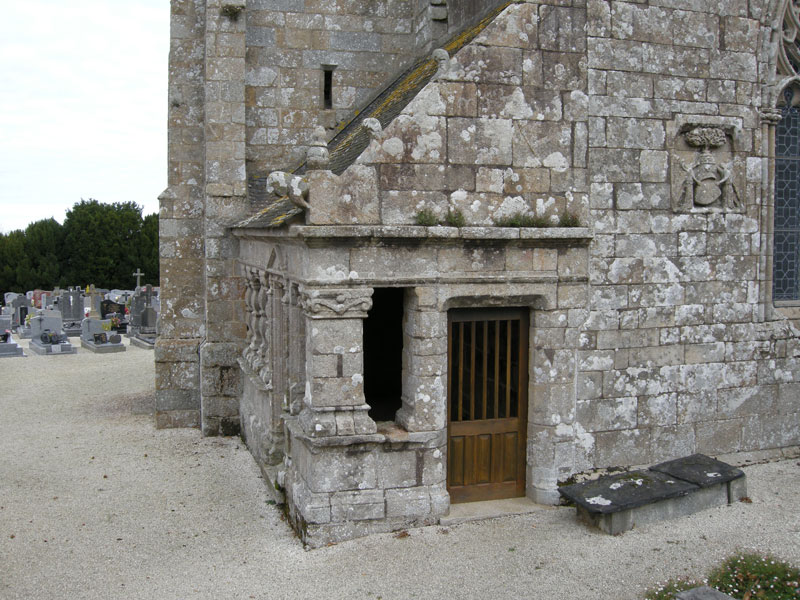
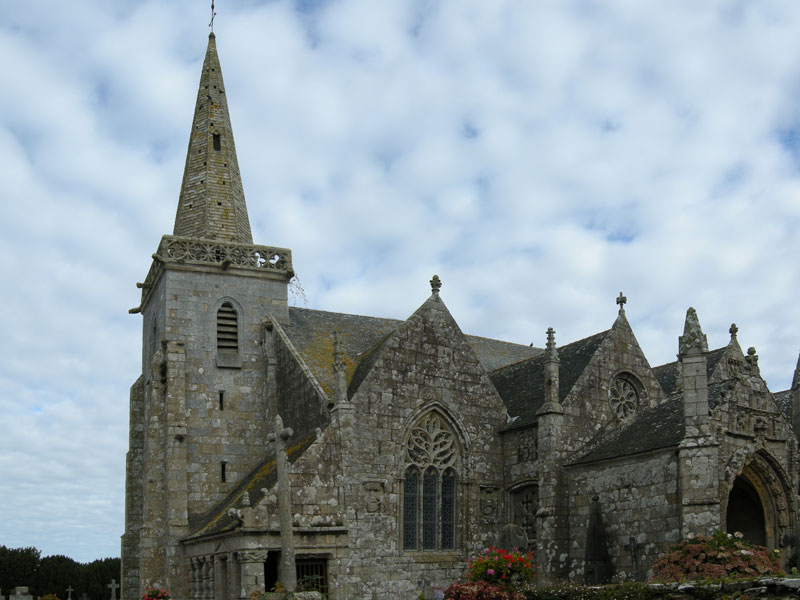
Located in Trégor, the village of Runan is home to a remarkable church built by the Knights Templar. Major renovations were carried out in the 16th century, including the construction of an ossuary. Sober and classical in style, the building contrasts with the Gothic inspiration of the rest of the church. The ensemble remains harmonious thanks to the exclusive use of grey granite. The church was listed as a historic monument on 19 December 1907. Gradually falling into disuse, the ossuary stood empty for many years.
In 2008, the newly elected municipal team began compiling a digital register of all graves in the cemetery. It wished to reclaim the space of certain vaults whose families had authorised the transfer of remains to the ossuary, or whose descendants could not be reached. The project aimed to restore the purpose of the 16th-century ossuary: to preserve the bones indefinitely, under ideal conditions, with respect and remembrance. The commissioners wanted to create a sober yet symbolically powerful place for contemplation—one that could give the site a distinct identity. The artist was asked to design a work that would accommodate the evolving nature of the ossuary, allowing new names to be added over time.
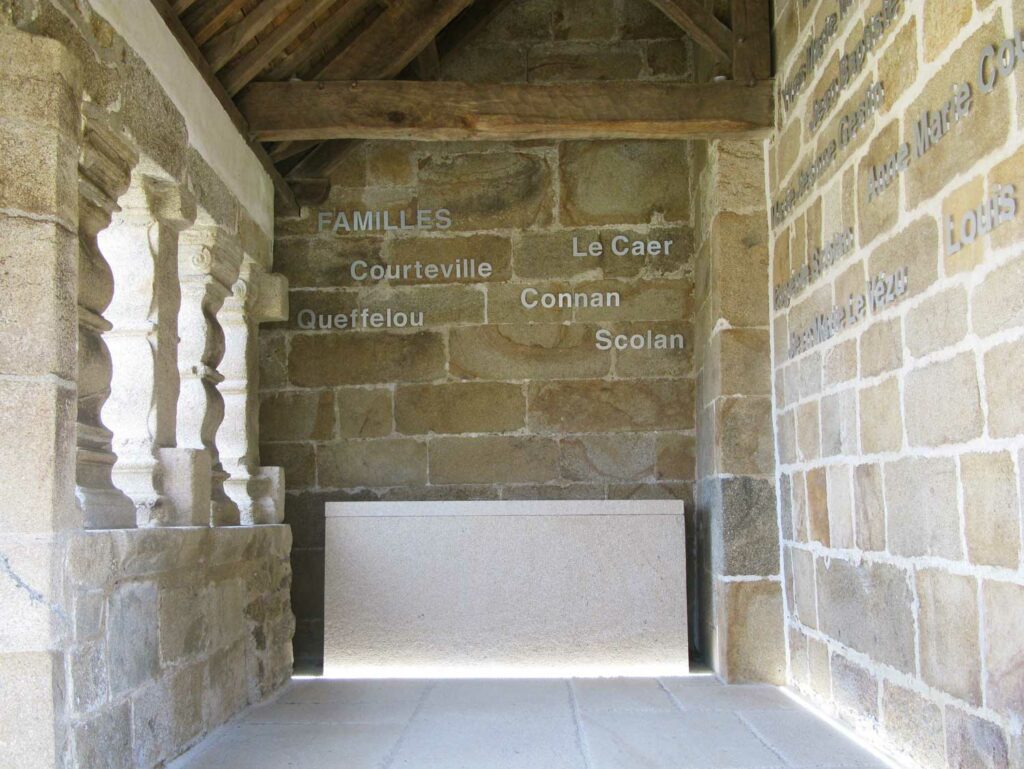
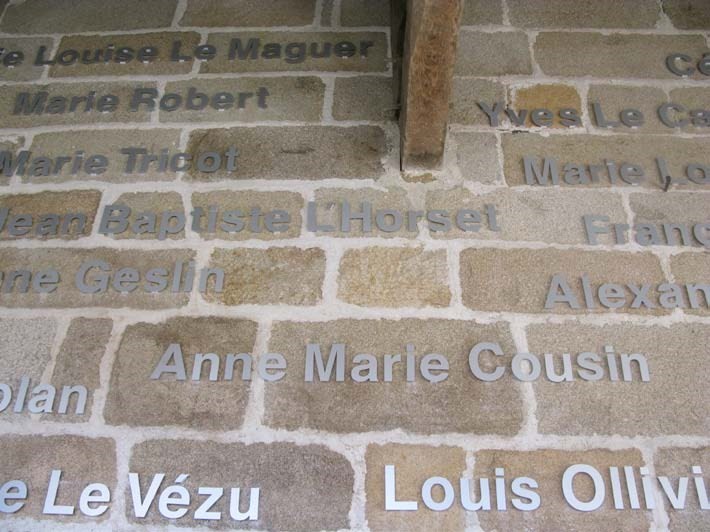
Tania Mouraud proposed a simple restoration using a single material—Trégor granite—to create a chromatic unity. The names of families and individuals are inscribed on the walls in brushed aluminium, with the possibility of adding more names in the future. Dedicated lighting enhances the overall composition. Seeking to evoke silence and respect for the dignity of those who came before us, Mouraud brings together functional and symbolic dimensions. The sobriety of the design and the granite create the impression of a timeless space, conducive to contemplation—a room “for oneself” within the hectic pace of contemporary life.